
Most genealogy projects start the same way: a name, a date, maybe an old photo that sparks curiosity about a relative nobody talks about anymore. As that research grows into a full family tree, it’s easy to focus entirely on names, places, and relationships while overlooking a parallel project that’s just as valuable and uses many of the same skills, building a record of your family’s health history.
A family health history isn’t a replacement for your genealogy work. It runs alongside it, using many of the same interviews, documents, and research habits you’ve already developed. This article walks through a practical approach to building one, step by step, including where genetic data fits into the process.
Why a Family Health Tree Belongs Next to Your Family Tree
A family tree tells you who your relatives were and how they connect to you. A family health history tells you something different but related: what conditions have shown up across those same connections, and how often. Doctors have used family health history as a screening tool for decades, since a condition appearing in multiple close relatives often carries more weight than an isolated case. Genealogists are unusually well positioned to build this kind of record, since they already have the family connections mapped out in detail.
Two Trees, One Set of Research Skills
The research techniques overlap almost entirely. Interviewing older relatives, tracking down old documents, and cross-referencing multiple sources for accuracy are exactly the skills genealogists already use to confirm names and dates. Applying that same rigor to health information just requires asking a few additional questions along the way.
Gathering Health Information From the Relatives You Already Interview
If you’re already interviewing relatives for genealogy purposes, you have a natural opportunity to gather health information at the same time. A few categories worth asking about during those conversations include:
- Chronic conditions such as heart disease, diabetes, or high blood pressure
- Cancer diagnoses, including the type and approximate age at diagnosis
- Mental health conditions, which are often left out of official records entirely
- Age and cause of death for close relatives
- Conditions that seem to appear repeatedly across generations
These conversations work best when they happen naturally alongside your usual genealogy questions, rather than as a separate, more clinical interview. Most relatives are far more comfortable sharing health details in the middle of a broader conversation about family history than they would be answering a formal medical questionnaire. It also helps to ask open-ended follow-up questions rather than a rigid checklist, since a casual mention of “the heart trouble that runs in the family” often leads to far more useful detail than a direct yes-or-no question ever would.
Timing these conversations matters too. Older relatives are often the only living link to health information about people who passed away before detailed medical records were common, so these interviews carry a kind of urgency that other genealogy research sometimes doesn’t.
Documenting Health Patterns Using the Records You Already Collect
Many of the documents genealogists gather for other reasons double as health history sources. Death certificates list cause of death. Obituaries sometimes mention specific illnesses. Military and pension records often include detailed health information collected for entirely different administrative reasons. As you build out your family tree, it’s worth keeping a separate note, even a simple spreadsheet, tracking any health-related detail you come across for each relative, organized by family branch.
Over time, this creates a document that looks a lot like a family tree but maps conditions instead of names, making it much easier to spot when something shows up on one side of the family far more often than chance would suggest.
Where DNA Data Fits Into the Picture
Interviews and records can suggest a pattern, but they can’t confirm whether that pattern has a genetic basis. That’s where DNA data becomes useful. If you or a close relative has already taken a DNA test through AncestryDNA, 23andMe, or a similar service for genealogy purposes, that same raw data file can be uploaded to a health-focused platform like SelfDecode. Doing so allows you to check whether specific genetic markers support the pattern your interviews and documents have been pointing toward.
Keep in mind that an uploaded file provides a more limited preview than SelfDecode’s own dedicated DNA kit. Third-party files cover a smaller portion of the genome and haven’t been through SelfDecode’s in-house lab processing and validation, so the analysis is less complete and less precise than what their kit provides.
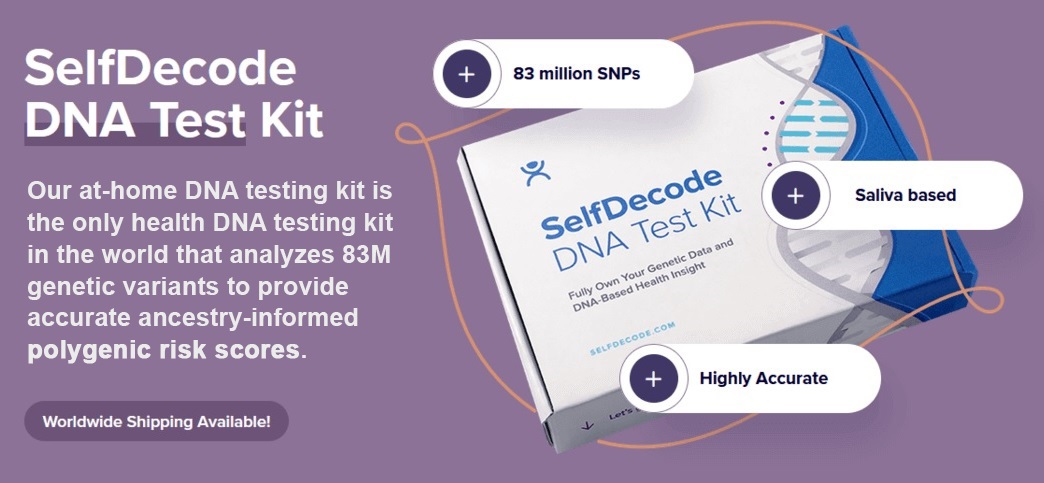
For anyone building out a serious family health history, particularly when interviews and records keep pointing to the same condition across generations, the SelfDecode At-Home DNA Test Kit offers a more thorough option. It reads a larger share of the genome and unlocks detailed reports across specific health categories, turning a suspected pattern into something grounded in genetic data rather than family recollection alone.
A family health history built this way, part interview, part document research, part genetic confirmation, becomes a genuinely useful companion to your family tree. It’s the same patient, layered research approach genealogists already know how to do, just pointed at a different kind of family inheritance.
Frequently Asked Questions
What’s the difference between a family tree and a family health history?
A family tree maps names, dates, and relationships. A family health history tracks health conditions across those same relationships, helping identify patterns that might have a genetic basis.
How do I start gathering family health information?
Many genealogists gather this information during the same interviews and record research they’re already doing, by asking relatives about chronic conditions, cancer history, and cause of death for family members.
Which records are useful for tracing family health history?
Death certificates, obituaries, and military or pension records often include health-related details, even though they weren’t created specifically to document family health patterns.
Can I use an existing ancestry DNA test to check for health patterns?
Yes. Raw DNA files from services like AncestryDNA and 23andMe can be uploaded to a health-focused platform such as SelfDecode for analysis unrelated to ancestry.
Is uploading a file as thorough as ordering a dedicated health DNA kit?
Not quite. Uploaded files provide a more limited preview, since they cover less of the genome and haven’t gone through SelfDecode’s in-house lab processing and validation, unlike their dedicated kit.