Somewhere between opening your test results and scrolling through your ethnicity breakdown, most people reach a natural stopping point. You’ve learned where your ancestors likely came from, maybe found a few unexpected surprises, and moved on with your day. It feels like the full story of what your DNA can tell you. In reality, it’s a small slice of a much bigger picture, one that has almost nothing to do with your family history and everything to do with your own body.
Consumer DNA tests were designed with a specific goal in mind: helping people trace their roots and connect with relatives. That’s a genuinely valuable service, but it means the report you received barely scratches the surface of what your genetic code actually contains. This article looks at what gets left out of a typical DNA test result, and why that missing information might matter more to you than your ethnicity percentages ever will.
The Narrow Focus of Standard Ancestry Reports
Every major consumer DNA test works from the same basic material: a sample of your saliva, processed in a lab to read specific points along your chromosomes. From there, the company applies its own analysis to that raw data, and for ancestry-focused companies, that analysis is aimed squarely at estimating your ethnic background and identifying genetic relatives. It’s a narrow, specific use of a very large set of information.
Why the Report Doesn’t Match the Data
The gap between what’s collected and what’s reported is significant. A typical test reads hundreds of thousands of genetic markers, yet your ancestry report is built from analyzing a comparatively small subset of those markers against reference population data. The rest sits untouched in your downloadable raw file, unless you go looking for a way to interpret it.
What Your Body-Related Genetics Actually Cover
The markers left out of a standard ancestry report are tied to a long list of traits related to how your body functions day to day. Genetic research has identified associations between specific variants and things like how your body metabolizes caffeine and alcohol, tendencies toward inflammation, patterns in mood and stress response, sleep characteristics, and factors connected to weight and metabolism. None of it shows up on an ethnicity dashboard, because none of it was ever meant to.
This is where a lot of people are caught off guard. They assumed their DNA test told them “everything,” when in reality it told them one specific thing very well, and left an entire category of personal information sitting untouched in a file they may never open. Think of it like getting a detailed map of your family’s geography without ever seeing a map of your own physiology, even though both were drawn from the exact same sample.
Why Genetic Research Splits Into Separate Fields
Ancestry analysis and health-related genetic analysis rely on different scientific approaches entirely. Ancestry estimates compare your genetic markers to patterns common in specific reference populations around the world. Health-related genetics instead draw on large-scale studies connecting particular gene variants, or combinations of them, to measurable traits and conditions. Both fields use the same type of raw data, SNPs, but they ask completely different questions of it.
That split explains why no single ancestry company report can reasonably cover both areas well. Building expertise in one field takes years of specialized research. Covering both would mean maintaining two entirely separate scientific operations under one roof, which is part of why most ancestry-focused companies stick to their lane.
Turning Your Existing DNA Data Into a Health Picture
The good news is that you don’t need a new sample or a new test to explore this side of your genetics. Since most major DNA testing companies let you download your raw data file, that same file can be uploaded to a platform built specifically for health-focused analysis, such as SelfDecode. Once uploaded, the file is analyzed for genetic patterns tied to categories like metabolism, mood, sleep, and inflammation, entirely separate from anything related to ancestry.
It’s worth setting expectations here. A file uploaded from another company gives you a limited preview of this information, since it covers a smaller portion of the genome and hasn’t gone through SelfDecode’s own in-house lab processing and validation. The results are a useful starting point, but they aren’t as complete or precise as what comes from SelfDecode’s dedicated testing process.
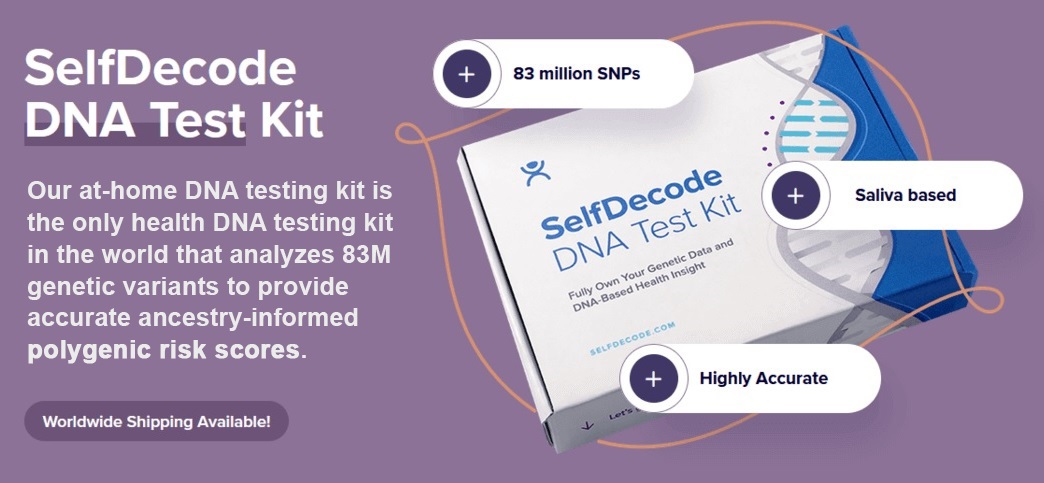
For a more thorough and validated look at your body’s genetics, the SelfDecode At-Home DNA Test Kit reads a much larger portion of your genome and unlocks access to their full library of detailed health reports. It’s the difference between a quick glance and a genuinely complete picture.
Either path starts with the same realization: your original DNA test told you a true story, just not the whole one. The rest of it has been sitting in a downloadable file the entire time, waiting for the right kind of analysis to bring it into focus. Whether you take that next step now or simply keep it in mind for later, that file isn’t going anywhere, and neither is the information inside it.
Frequently Asked Questions
Does my DNA test results page show everything my sample contains?
No. Standard ancestry reports are built from a portion of your genetic markers. The full set of data collected from your sample is available in your downloadable raw DNA file, which typically contains far more than what appears in the report itself.
Why don’t ancestry companies include health information in their standard reports?
Ancestry analysis and health-related genetic analysis are separate scientific fields that use different research and methods. Most ancestry companies specialize in one area rather than building expertise in both.
Can I get health insights from a DNA test I already took?
Yes. Many people download their existing raw DNA file and upload it to a health-focused platform like SelfDecode, which analyzes it for genetic patterns connected to traits like metabolism, sleep, and mood.
Is an uploaded file as accurate as a dedicated health DNA kit?
Not quite. Uploaded files provide a more limited preview, since they cover less of the genome and haven’t gone through the same in-house lab processing and validation as a dedicated kit.
What’s the benefit of ordering a dedicated health-focused DNA kit?
A dedicated kit reads a larger portion of your genome and provides access to more complete, validated reports than an uploaded file from another testing company can offer.