Spend enough time in genealogy forums, Facebook groups, or local historical society meetings, and you’ll notice a shift in the kinds of questions people are asking. Alongside the usual requests for help finding a missing census record or identifying a mystery ancestor in an old photograph, more people are asking something different: what else can I learn from the DNA data I already have? It’s a sign that the genealogy community, long focused almost exclusively on ancestry, is starting to look at health genetics as a natural extension of the hobby.
This shift didn’t come out of nowhere. It’s the result of a few converging trends, some technological, some cultural, that have made health genetics a logical next interest for people who already spend their free time researching family history. This article looks at why this is happening and how genealogists are approaching it, along with what it might mean for anyone who has spent years focused purely on names, dates, and record collections.
A Research Hobby Built on Curiosity Naturally Expands
Genealogy has always attracted people driven by curiosity about where they come from and who their ancestors were. That same curiosity doesn’t stay neatly confined to names and dates. Once someone has spent months tracing a family line back several generations, it’s a short leap to start wondering about other kinds of inheritance, including the biological patterns tied to health that get passed down alongside surnames and traditions.
The Research Skills Transfer Naturally
Genealogists are also unusually well equipped for this kind of exploration. They’re already comfortable interpreting technical data, cross-referencing multiple sources, and thinking critically about what a piece of evidence does and doesn’t prove. Those same skills apply directly to interpreting genetic health information, which is part of why the transition feels natural rather than like starting a new hobby from scratch. Someone who has spent years learning to weigh conflicting census records against each other is already halfway to understanding how to evaluate genetic evidence with the same healthy skepticism.
Family History and Family Health Have Always Overlapped
Long before DNA testing existed, genealogists were already documenting health information without necessarily thinking of it that way. Cause of death on a death certificate, a mention of illness in an obituary, a note about a relative’s disability in a census record, these details have always been part of the historical record genealogists collect. The current shift toward health genetics isn’t introducing something foreign to the hobby. It’s giving genealogists a more precise tool for something they’ve been circling for years, replacing scattered anecdotal detail with information that can actually be verified.
Reasons More Genealogists Are Exploring Health Genetics
A few specific factors are driving this trend within the genealogy community:
- Millions of people now have a raw DNA file sitting unused after completing an ancestry test, making health genetics an easy next step rather than a new financial commitment
- Family health history has become a more visible topic in mainstream health conversations, making people more aware of how much genetics can explain about inherited conditions
- Genealogy societies and online communities increasingly share information about health-focused genetic platforms, normalizing the practice among hobbyists
- Multi-generational family research naturally raises questions about which traits are genetically inherited versus coincidental
- Growing public interest in personalized health information has made genetic health analysis more mainstream and accessible than it was even a few years ago
None of these factors exist in isolation. Together, they’ve created a genealogy community that’s increasingly comfortable treating health genetics as a natural companion to ancestry research, rather than a completely separate pursuit. It’s a shift that mirrors how the hobby has absorbed other new tools over the years, gradually and without much resistance, once enough people saw the practical value firsthand.
How to Get Started With the Data You Already Have
If you’re part of this shift and want to explore your own health genetics, you likely don’t need a new test. Raw DNA files from AncestryDNA, 23andMe, MyHeritage, and similar services can be uploaded to a health-focused platform like SelfDecode, which analyzes the same file for genetic patterns connected to health and lifestyle traits, entirely separate from ancestry or matching.
It’s worth knowing upfront that an uploaded file provides a more limited preview than SelfDecode’s own dedicated DNA kit. Third-party files cover a smaller portion of the genome and haven’t gone through SelfDecode’s in-house lab processing and validation, so the results are less complete and less precise than what their own kit produces.
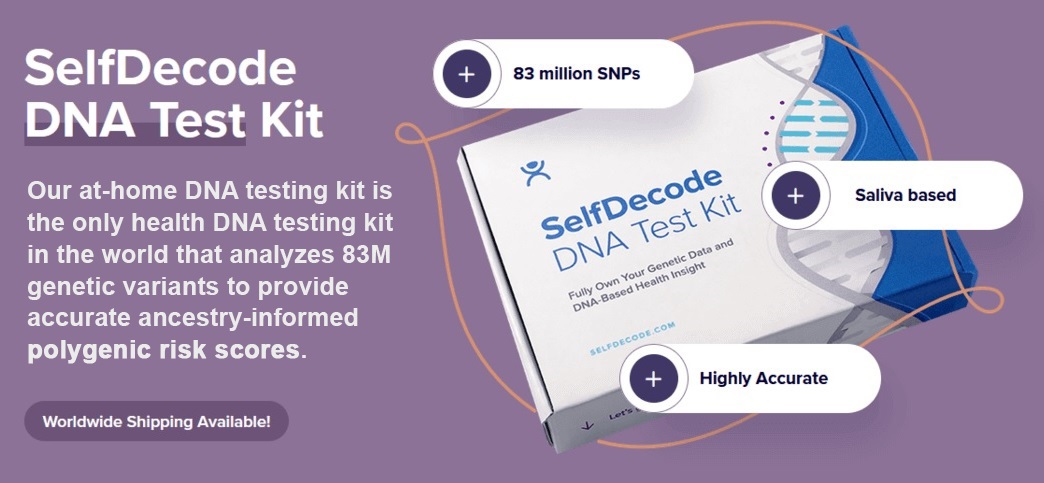
For genealogists who want to take this new interest further, the SelfDecode At-Home DNA Test Kit reads a much larger share of the genome and unlocks a full library of detailed health reports. It’s a natural way to formalize what many hobbyists are already exploring informally, turning curiosity into a genuinely thorough resource.
The genealogy community has always been driven by a desire to understand where people come from. It makes sense that the same community is now just as interested in understanding what that inheritance means for the people living today. That curiosity, applied consistently across generations of family historians, has a way of eventually reaching every corner of what a family’s DNA can actually explain.
Frequently Asked Questions
Why are genealogists becoming interested in health genetics?
Many genealogists already have unused raw DNA data from ancestry testing, and their existing research skills, cross-referencing sources and interpreting technical data, transfer naturally to exploring health genetics.
Yes, in an indirect way. Records like death certificates and obituaries often include health-related details, even though genealogists weren’t necessarily using them to trace genetic health patterns.
Do I need a new DNA test to explore health genetics as a genealogist?
Not necessarily. Raw DNA files from services like AncestryDNA and 23andMe can be uploaded to a health-focused platform such as SelfDecode without taking a new test.
How complete is the analysis from an uploaded DNA file?
Uploaded files provide a more limited preview, since they cover less of the genome and haven’t gone through SelfDecode’s in-house lab processing and validation, unlike their dedicated kit.
Is health genetics research replacing traditional genealogy?
No. It’s viewed as an extension of traditional genealogy research rather than a replacement, adding a new layer of information to work genealogists are already doing.