
If you’ve managed to get an older relative, a grandmother, grandfather, or great-aunt, to take a DNA test alongside you, you already have something most genealogists would consider a research goldmine: genetic data spanning two generations of the same family. Most people who reach this point focus entirely on what it means for ancestry, confirming relationships, filling in ethnicity details, maybe settling a long-standing family debate about which side of the family a certain trait “really” comes from. That’s valuable work, but it’s only part of what multi-generational DNA data can actually tell you.
Comparing genetic data across generations opens up a research angle that a single person’s DNA test can’t offer on its own: the ability to see which traits, and potentially which health-related genetic patterns, are actually being passed down, rather than simply assumed. This article looks at why testing across generations matters, and what it takes to get a fuller picture from the data you and your relatives already have. It’s a research opportunity that’s easy to miss, mostly because it requires looking past the ancestry results that both generations already received.
Why Multi-Generational Testing Changes What You Can Learn
A single DNA test tells you about yourself. Two DNA tests from different generations of the same family tell you about inheritance. When you can compare your genetic markers directly to a grandparent’s, you move from guessing what might have been passed down to actually seeing it. This is exactly the kind of comparison genealogists prize when confirming relationships, and the same principle applies to any other genetic trait worth investigating, including ones related to health.
Filling In the Generation You Never Fully Knew
For a lot of families, an older relative’s generation remains something of a mystery, shaped by stories more than documentation. Testing a grandparent’s DNA alongside your own turns some of that mystery into measurable data, giving you a genetic reference point for a generation that historical records alone often can’t fully capture.
What Grandma’s Generation Never Had the Chance to Know
Consumer DNA testing didn’t exist for most of your grandparents’ adult lives. Whatever they understood about their own health came from doctors, family history, and personal experience, without the benefit of genetic data to confirm or explain any of it. If Grandma has taken a DNA test recently, her raw data file likely contains far more information than her ancestry report reveals, the same gap that exists in every consumer DNA test, just compounded by an entire additional generation’s worth of unexplored genetic history.
That gap represents a real opportunity. A generation that lived without access to genetic health information now has a way to look back at their own biology, and their descendants have a way to see how much of that biology carried forward.
Comparing Genetic Traits Across Generations
Once you have DNA data from more than one generation, you can start looking at specific traits with real evidence instead of family speculation. Did Grandma’s tendency toward high blood pressure show up in a genetic marker connected to that trait, and does that same marker appear in your own file? Does a lifelong pattern of light sleeping trace back to a specific genetic variant shared across generations? These aren’t questions an ethnicity report can answer, but they’re exactly the kind of question multi-generational data was built to address.
This kind of comparison also helps separate genuine genetic patterns from coincidence. A trait that appears in your data and your grandmother’s data, and ideally a generation in between, carries a lot more weight than a trait mentioned once in a family story with no genetic backing at all. It shifts the conversation from “that’s just what everyone says” to something you can actually point to and explain.
Turning Multi-Generation DNA Into Health Insight
To actually explore this side of the data, both your file and Grandma’s raw DNA file can be uploaded to a health-focused platform like SelfDecode. Rather than analyzing for ethnicity or matches, SelfDecode looks specifically at genetic markers connected to health and lifestyle traits, letting you compare results across generations rather than relying on a single data point.
It’s worth knowing that uploaded files provide a more limited preview than SelfDecode’s own dedicated DNA kit, since third-party files cover less of the genome and haven’t gone through SelfDecode’s in-house lab processing and validation. For a family genuinely interested in comparing genetic health patterns across generations, that limitation is worth taking seriously.
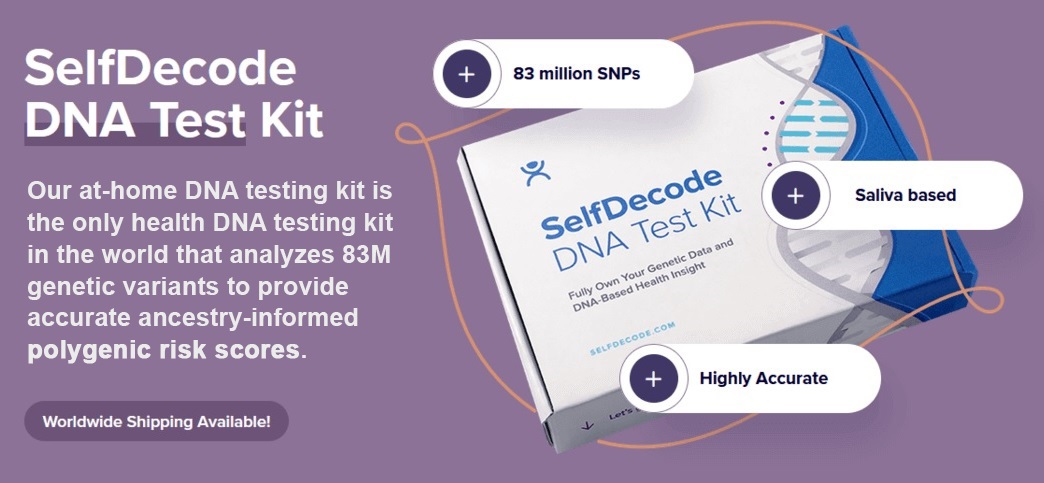
For a more complete and validated comparison, the SelfDecode At-Home DNA Test Kit reads a much larger portion of the genome and unlocks detailed reports across specific health categories, for both you and any relative willing to test alongside you. It turns a family comparison from a rough sketch into something backed by real genetic depth.
Grandma’s DNA has already told your family more than any ethnicity report ever could. The rest of that story is sitting in her raw data file, waiting for someone in the family to go looking for it. Given how few people from her generation ever had the chance to explore that side of their own genetics, it may end up being one of the more meaningful discoveries your family research turns up.
Frequently Asked Questions
Why does testing multiple generations matter for genetic research?
Comparing DNA across generations allows you to see which traits are actually shared, rather than assuming inheritance based on family stories alone.
Yes. A raw DNA file from any generation can be uploaded to a health-focused platform like SelfDecode for analysis unrelated to ancestry.
What can comparing DNA across generations reveal?
It can help confirm whether specific traits, such as blood pressure tendencies or sleep patterns, are genetically shared across generations rather than coincidental.
Is an uploaded file as thorough as a dedicated health DNA kit?
Not quite. Uploaded files provide a more limited preview, since they cover less of the genome and haven’t gone through SelfDecode’s in-house lab processing and validation.
Do both generations need to use the same DNA testing service?
No. SelfDecode accepts raw DNA files from several major testing services, so relatives who tested with different companies can still be compared on the same health-focused platform.