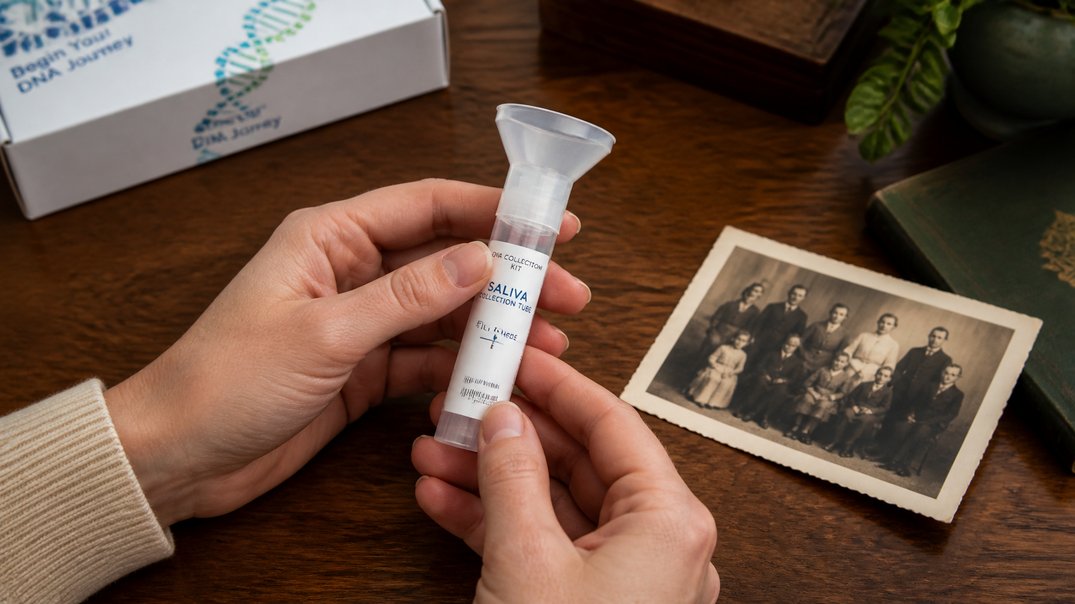
Every family has one. A pattern that gets mentioned at reunions and holiday dinners but never fully explained. Maybe it’s the way heart problems seem to skip a generation and then hit hard in the next one. Maybe it’s why three cousins on the same side of the family all struggle with the same sleep issues, or why a certain relative’s mood swings get blamed on “just being like Grandpa.” These mysteries live in family lore, but an ethnicity report was never built to solve them.
It’s an easy assumption to make. You took a DNA test, got a detailed breakdown of your ethnic background, and figured that covered the genetic side of the story. In reality, ethnicity percentages answer a narrow question about ancestral origin, while the family patterns that actually puzzle people usually have nothing to do with where their ancestors lived. This article looks at why those mysteries stay unsolved by a standard DNA test, and what it takes to actually get answers.
What an Ethnicity Percentage Actually Measures
Your ethnicity estimate comes from comparing specific genetic markers in your DNA to reference samples collected from populations around the world. It’s a statistical best guess about which regions your ancestors most likely came from, built from patterns that tend to appear more frequently in certain populations. It’s a genuinely useful tool for genealogy, but it was designed to answer one specific question, and that question has nothing to do with why your uncle can’t shake his seasonal allergies or why migraines seem to follow one particular branch of your tree.
A Narrow Tool Built for a Narrow Job
Ethnicity analysis pulls from a specific category of genetic markers chosen because they vary predictably between populations. The markers connected to inherited health traits are a completely different set, studied through entirely separate research. Both exist in your DNA at the same time, but one type of analysis has no ability to answer questions that belong to the other.
Common Family Mysteries That Stay Unsolved
Some of the most persistent family mysteries fall squarely into the category that ethnicity reports can’t touch. A tendency toward high blood pressure that shows up in every generation on one side of the family. A shared sensitivity to certain medications. A pattern of anxiety or mood swings that seems to follow specific relatives more than others. A family joke about everyone being “night owls” that turns out to reflect a genuine inherited trait. These patterns get talked about for years, sometimes generations, without anyone connecting them to anything more concrete than “it just runs in the family.”
The frustrating part is that many of these patterns likely do have identifiable genetic components. They just aren’t the kind of components an ancestry composition report was ever designed to detect. Ask around at your next family gathering and you’ll likely hear at least one health-related pattern repeated with total confidence, framed as settled family fact, even though nobody has ever actually investigated whether it holds up.
Why DNA Matching Doesn’t Explain These Patterns Either
It’s worth addressing a common misconception here. Finding DNA matches, the cousins and relatives your test connects you with, feels like deep genetic analysis, but it’s actually a separate process from both ethnicity estimation and health-related genetics. Matching works by identifying shared segments of DNA between you and other test-takers, which is powerful for building a family tree but tells you nothing about what those shared segments might mean for anyone’s health. Three types of analysis, three completely different purposes, all pulled from the same raw file. It’s a reminder of just how much unused information is sitting in a file most people only ever check once.
Where Health-Focused Genetic Analysis Picks Up the Thread
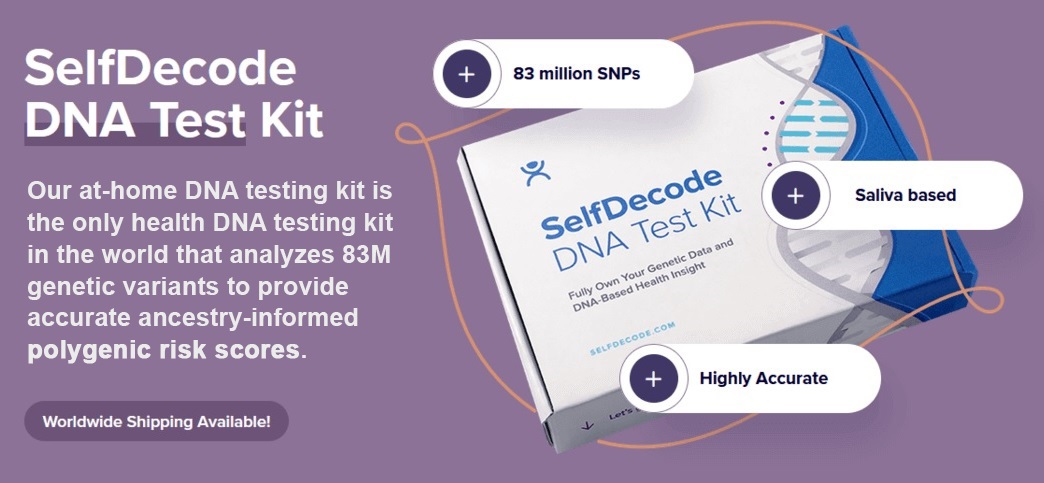
This is exactly the gap that a platform like SelfDecode is built to fill. It accepts the raw DNA file you already have from AncestryDNA, 23andMe, or similar services and analyzes it specifically for patterns connected to health and lifestyle traits, the same category of family mystery that ethnicity reports and DNA matching both leave untouched. Uploading your file won’t identify a single gene responsible for “the family temper,” but it can surface real, research-backed genetic patterns connected to traits like blood pressure regulation, medication sensitivity, mood-related genetics, and sleep patterns.
One thing worth knowing upfront: an uploaded file provides a more limited preview than SelfDecode’s own dedicated DNA kit. Third-party files cover less of the genome and haven’t gone through SelfDecode’s in-house lab processing and validation, so the results are less complete and less precise than what their own kit can offer.
For family mysteries that feel worth taking seriously, the kind that keep coming up at every family gathering, the SelfDecode At-Home DNA Test Kit provides a more thorough option. It reads a larger share of the genome and unlocks a full library of detailed health reports, giving you a far more complete picture than an uploaded file alone can offer.
The mystery your family has been discussing for years might finally have an explanation. It just was never going to come from an ethnicity percentage.
Frequently Asked Questions
Can an ethnicity report explain health patterns that run in my family?
No. Ethnicity reports are built from a specific set of markers used to estimate ancestral origin. Health-related patterns rely on an entirely different set of genetic markers and research.
Does finding DNA matches tell me anything about inherited health traits?
No. DNA matching identifies shared genetic segments between you and other test-takers to help build family connections. It doesn’t analyze those segments for health-related meaning.
Can I check for health patterns using a DNA test I’ve already taken?
Yes. Your raw DNA file from services like AncestryDNA or 23andMe can be uploaded to a health-focused platform such as SelfDecode for analysis unrelated to ancestry or matching.
Is an uploaded file as detailed as a dedicated health DNA kit?
Not quite. Uploaded files offer a more limited preview, since they cover less of the genome and haven’t gone through SelfDecode’s in-house lab processing and validation.
What kinds of family patterns might genetic analysis help explain?
Traits like blood pressure tendencies, medication sensitivity, mood-related genetics, and sleep patterns are examples of areas where genetic analysis may offer insight into long-standing family patterns.