Genealogy has changed dramatically over the past few decades. What used to require weeks in courthouse basements and rolls of microfilm can now often be done from a laptop, thanks to digitized records, searchable databases, and DNA testing that connects distant cousins in seconds. Each shift in the hobby opened up research that simply wasn’t possible before. A newer shift is quietly underway right now, one that takes the family tree you’ve already built and extends it into an entirely new dimension: family health.
This isn’t a separate hobby competing for your attention. It’s a natural extension of research many genealogists are already doing, using data many of them already have sitting in an old DNA testing account. This article looks at how genealogy research has evolved to get here, and what building a family health tree actually looks like as the next chapter.
How Genealogy Research Has Evolved Over Time
Traditional genealogy relied almost entirely on paper records: birth and death certificates, church registries, census data, immigration documents. Researching a single ancestor could take months of correspondence with archives and courthouses. The internet changed that considerably, digitizing millions of records and making them searchable from home. Then came DNA testing, which added a completely new layer, allowing people to confirm relationships and discover connections that paper records alone couldn’t reveal.
Each Shift Built on the Last One
What’s notable about this progression is that each new tool didn’t replace the old research methods, it built on top of them. Digitized records made document research faster, not obsolete. DNA testing added confirmation and discovery on top of paper trails, not a replacement for them. The move toward family health trees follows the same pattern. It doesn’t replace anything genealogists already do. It adds a new layer of information, drawn from data most people already possess. Longtime hobbyists who remember the days of ordering microfilm through the mail are often the quickest to recognize this pattern, since they’ve already watched the field expand more than once.
Why DNA-Based Genealogy Set the Stage for This Shift
When DNA testing became mainstream for genealogy, it introduced something new to the hobby: a downloadable file of raw genetic data sitting in nearly every serious genealogist’s account. That file was collected for ancestry purposes, ethnicity estimates and DNA matching specifically, but it contains far more information than those two uses require. Most people never look past the ancestry report their testing company generated for them, unaware that the same file holds data connected to entirely different categories of information.
This is the quiet infrastructure that makes a family health tree possible without any new testing. The data has already been collected. It’s simply been sitting unused, waiting for a research approach built specifically to interpret it. In a sense, the hard part is already done, since the file exists, the sample was already collected, and the only missing piece is the right lens to look at it through.
Why Health Genetics Is the Logical Next Chapter
Genealogists have always cared about more than names and dates. Family stories, traditions, and traits get passed down alongside the historical record, and health has always quietly been part of that picture, whether it’s a grandmother’s warning about heart problems or a family joke about everyone being early risers. A family health tree simply gives that existing interest a more structured, evidence-based form, using genetic data instead of relying purely on memory and speculation.
It also fits naturally into how genealogists already organize their research. Just as a family tree maps relationships across generations, a family health tree maps genetic patterns across those same relationships, using many of the same organizational habits genealogists have already developed for tracking names, dates, and locations.
Building a Family Health Tree From Data You Already Have
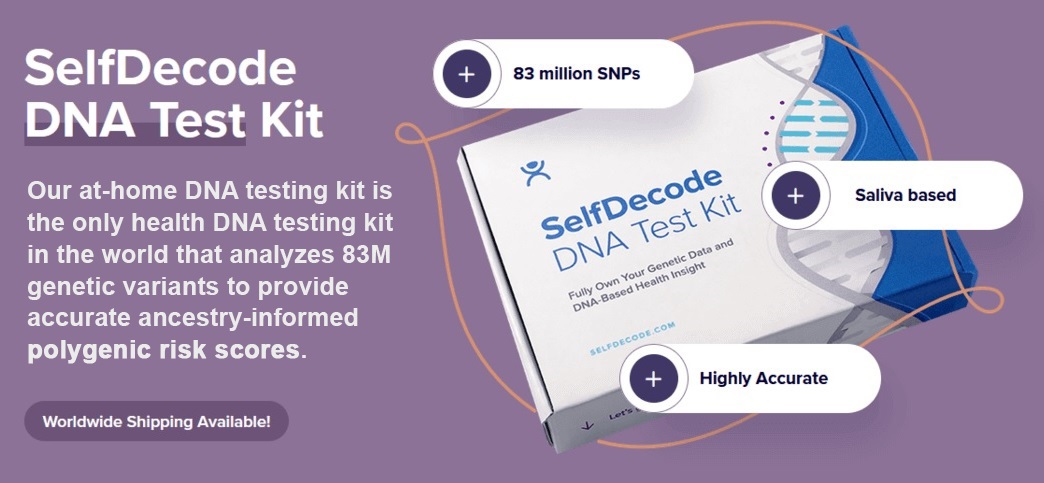
Getting started doesn’t require a new DNA sample. If you’ve already tested with AncestryDNA, 23andMe, or a similar service, you can download your existing raw DNA file and upload it to a health-focused platform like SelfDecode. Rather than analyzing your file for ethnicity or matches, SelfDecode looks at genetic patterns connected to health and lifestyle traits, the layer of information your original test never explored.
It’s worth setting realistic expectations from the start. An uploaded file gives a more limited preview than SelfDecode’s own dedicated DNA kit, since third-party files cover less of the genome and haven’t gone through SelfDecode’s in-house lab processing and validation. The results are a solid starting point, but not as complete or precise as what their own kit provides.
For genealogists ready to take this next step seriously, the SelfDecode At-Home DNA Test Kit reads a much larger portion of the genome and unlocks a full library of detailed health reports. It’s the difference between dipping a toe into family health research and building out the same kind of thorough, well-documented record genealogists already expect from their ancestry work.
The family tree you’ve spent years building isn’t finished. It just found its next chapter, and the data to write it has likely been sitting in your account the whole time.
Frequently Asked Questions
What is a family health tree?
A family health tree maps health-related genetic patterns across family relationships, similar to how a traditional family tree maps names, dates, and connections between relatives.
Do I need new DNA testing to build a family health tree?
Not necessarily. Many people use the raw DNA file they already have from services like AncestryDNA or 23andMe by uploading it to a health-focused platform such as SelfDecode.
Ancestry-focused DNA tests are built to estimate ethnicity and identify DNA matches. Health-related genetic analysis uses a different set of markers and research, which most ancestry companies don’t include in their standard reports.
Is an uploaded DNA file as thorough as a dedicated health DNA kit?
Not quite. Uploaded files provide a more limited preview, since they cover less of the genome and haven’t gone through the same in-house lab processing and validation as a dedicated kit.
How does building a family health tree fit with traditional genealogy research?
It builds on top of existing genealogy work rather than replacing it, adding a new layer of information using data and research habits most genealogists already have in place.