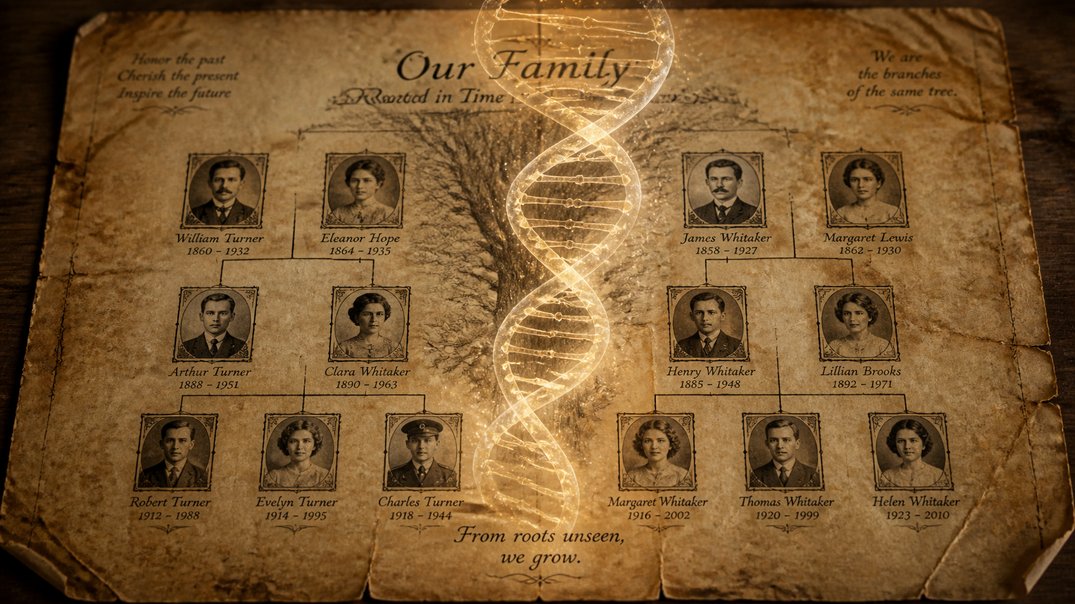
Autoimmune conditions, conditions where the immune system mistakenly targets the body’s own tissue, have a well-documented tendency to run in families. Rheumatoid arthritis, celiac disease, type 1 diabetes, and lupus all show up more often in people with a close relative who has the same or a related condition. What’s less commonly discussed is how much of this connects to specific, well-studied genes, and how the frequency of those genes can vary meaningfully across different ancestral populations.
This is a topic that deserves care, since genetic risk and an actual diagnosis are two very different things. Understanding the real science, including where it’s strong and where it’s more limited, gives a much clearer picture than a vague sense that autoimmune conditions “run in the family.” It also explains why family history, when discussed with a doctor, remains one of the most useful pieces of context available for understanding personal risk.
The Immune System’s Genetic Fingerprint: HLA Genes
At the center of most autoimmune genetic research is a group of genes called HLA, short for human leukocyte antigen. These genes help the immune system distinguish the body’s own cells from foreign invaders like bacteria and viruses. HLA genes are unusually diverse across the human population, more so than most other parts of the genome, and specific HLA variants have some of the strongest, most consistently replicated associations with autoimmune disease risk found anywhere in genetics.
Because HLA genes are inherited as a set from each parent, they tend to cluster within families and, more broadly, within populations that share ancestral history. This is part of why certain autoimmune conditions appear at different rates in different populations around the world, a pattern researchers have documented extensively.
How HLA Variation Traces Back to Ancestry
HLA gene frequencies vary across populations partly due to historical patterns of infectious disease exposure. Certain HLA variants offered better protection against specific pathogens common in certain regions throughout human history, which shaped how common those variants became in different ancestral groups over many generations. The same evolutionary pressure that shaped protective immune responses to historical diseases also shaped, as something of a side effect, the population-level frequency of variants now linked to autoimmune risk.
This connects directly to the same raw DNA data used for ancestry estimates. The markers used to calculate ethnicity percentages sit alongside, and sometimes overlap with, regions of the genome tied to HLA variation, meaning a person’s ancestral background and their immune-related genetic profile are, in a real sense, part of the same underlying story.
Well-Documented Links Between HLA and Specific Autoimmune Conditions
Some of the clearest examples in autoimmune genetics involve specific HLA variants and specific conditions. A variant called HLA-DQ2, and a related variant called HLA-DQ8, are present in the vast majority of people diagnosed with celiac disease, an autoimmune reaction to gluten. A variant called HLA-B27 is strongly associated with ankylosing spondylitis, a form of inflammatory arthritis. Type 1 diabetes and several other autoimmune conditions have their own well-documented HLA associations as well.
It’s worth being precise about what these associations mean. Carrying one of these variants substantially raises statistical risk, but it does not mean a person will develop the condition. Many people carry HLA-DQ2, for example, and never develop celiac disease, since additional genetic and environmental triggers appear to be necessary for the condition to actually emerge.
Beyond HLA: General Inflammation Genes and Family Patterns
Autoimmune risk isn’t only about HLA. Other genes affect how the body regulates general inflammation, including genes involved in producing signaling molecules called cytokines, which coordinate immune responses throughout the body. Variations in these genes have been associated with differences in baseline inflammation levels, which can influence a range of conditions beyond classic autoimmune diseases, including some cardiovascular and metabolic conditions where inflammation plays a supporting role.
This broader inflammation genetics helps explain why families sometimes show a pattern of related but not identical conditions, one relative with rheumatoid arthritis, another with a thyroid autoimmune condition, another with general inflammatory symptoms without a formal diagnosis. Shared underlying inflammation-related genetics can contribute to this kind of varied but connected family pattern.
Why Having a Risk Variant Doesn’t Mean a Diagnosis
It bears repeating clearly: genetic risk variants describe probability, not certainty. Autoimmune conditions typically require a combination of genetic susceptibility and an environmental trigger, which might include infections, stress, diet, or factors researchers are still working to fully understand. This is exactly the kind of finding that benefits from professional interpretation. A doctor or genetic counselor can place a specific genetic result in the context of family history, symptoms, and current medical guidelines, which is a far more useful approach than treating a single variant as a prediction on its own.
Finding These Markers in Your Own Raw DNA File
Genetic markers related to inflammation and immune function are part of the same broad panel read during standard ancestry testing, meaning they already exist in the raw DNA file downloaded from AncestryDNA, 23andMe, MyHeritage, or FamilyTreeDNA, even though ancestry platforms don’t report on them. SelfDecode, a genetics and health analysis platform, allows that existing file to be uploaded directly, generating a dedicated report on inflammation and autoimmunity-related pathways alongside other health areas.
An uploaded file only offers a limited preview of this analysis. Because it was originally generated by a different company’s lab using different chip technology, it may not include every marker SelfDecode’s system reads, and the resulting report is narrower than what a sample processed directly through SelfDecode’s own lab would provide.
For a fuller picture, including a more complete inflammation and autoimmunity report beyond what an uploaded file offers, the SelfDecode At-Home DNA Test Kit, priced at approximately $99, processes a new sample through SelfDecode’s own lab from the start.
Family patterns of autoimmune conditions turn out to be genuinely rooted in specific, well-studied genetics, tied closely enough to ancestry that the same DNA used to trace a family tree also carries part of this story, one best explored alongside a doctor’s guidance rather than in isolation.
Frequently Asked Questions
Do autoimmune conditions really run in families?
Yes. Conditions like rheumatoid arthritis, celiac disease, and type 1 diabetes show well-documented family clustering, largely connected to inherited variants in HLA genes, which play a central role in immune system function.
What are HLA genes?
HLA, short for human leukocyte antigen, refers to a group of genes that help the immune system distinguish the body’s own cells from foreign invaders. Certain HLA variants have strong, well-established associations with specific autoimmune conditions.
Does carrying an autoimmune risk gene mean I’ll develop the condition?
No. Genetic variants raise statistical risk but don’t guarantee a diagnosis. Most autoimmune conditions require a combination of genetic susceptibility and environmental triggers to actually develop.
Why do autoimmune conditions vary by ancestry?
HLA gene frequencies vary across populations, partly shaped by historical infectious disease exposure that differed by region over many generations, which affects how common certain autoimmune-linked variants are in different ancestral groups.
Should I see a doctor if autoimmune conditions run in my family?
Yes, mentioning family history to a doctor is generally worthwhile, since it provides useful context for understanding personal risk and determining whether any screening or monitoring makes sense.