
Comparing 23andMe to SelfDecode is a slightly different conversation than comparing a purely ancestry-focused company like AncestryDNA to a health platform, because 23andMe has always positioned itself as offering a bit of both. Its Health + Ancestry product includes ethnicity estimates and relative matching alongside a limited set of health-related reports, which sometimes leads people to assume it covers the same ground as a dedicated health genetics platform.
It doesn’t, at least not to the same depth. Understanding exactly what 23andMe’s health reports do and don’t cover, compared to what a platform built entirely around health genetics offers, makes it much easier to know what’s still missing from a 23andMe result, and where an existing 23andMe raw data file can be put to further use.
What 23andMe Actually Measures and Reports
23andMe analyzes a saliva sample using a genotyping chip that reads several hundred thousand SNPs, the same general approach used across the consumer DNA testing industry. Beyond ethnicity estimates and relative matching, 23andMe has historically offered a defined set of health-related reports, including carrier status reports for certain inherited conditions, a handful of FDA-authorized genetic health risk reports covering specific, well-established conditions, and lighter wellness and trait reports covering things like caffeine metabolism or muscle composition.
This is a meaningfully broader health offering than a purely ancestry-focused company provides, but it’s also narrower than it might first appear. 23andMe’s health reports focus on a limited, specifically vetted list of conditions and traits, chosen in part because of the regulatory requirements involved in offering direct-to-consumer genetic health risk information. It does not offer the kind of broad, wellness-oriented library covering areas like inflammation pathways, detailed metabolic tendencies, or mood-related genetics in the depth a dedicated health platform typically does. The list of conditions 23andMe covers has expanded gradually over the years, but each addition still goes through a formal review process before it becomes available to users, which naturally keeps the overall report library smaller than a platform built without those same constraints.
A Note on 23andMe’s Recent Ownership Change
It’s worth being transparent about a significant development in 23andMe’s corporate history. The company filed for bankruptcy in 2025, following a period of financial strain and a major 2023 data breach that affected millions of user accounts. After a court-supervised sale process, 23andMe’s assets, including its consumer genetics business, were acquired by TTAM Research Institute, a nonprofit organization founded by former 23andMe CEO Anne Wojcicki, with the sale completing in mid-2025. The company has continued operating its consumer genome and research services under this new ownership structure.
This history doesn’t necessarily affect what the platform’s health and ancestry reports contain, but it’s relevant context for anyone weighing where to store or upload sensitive genetic data, and it’s worth checking the company’s current privacy policy and terms of service directly for the latest details, since ownership changes like this one can come with updated data practices.
What SelfDecode Actually Measures and Reports
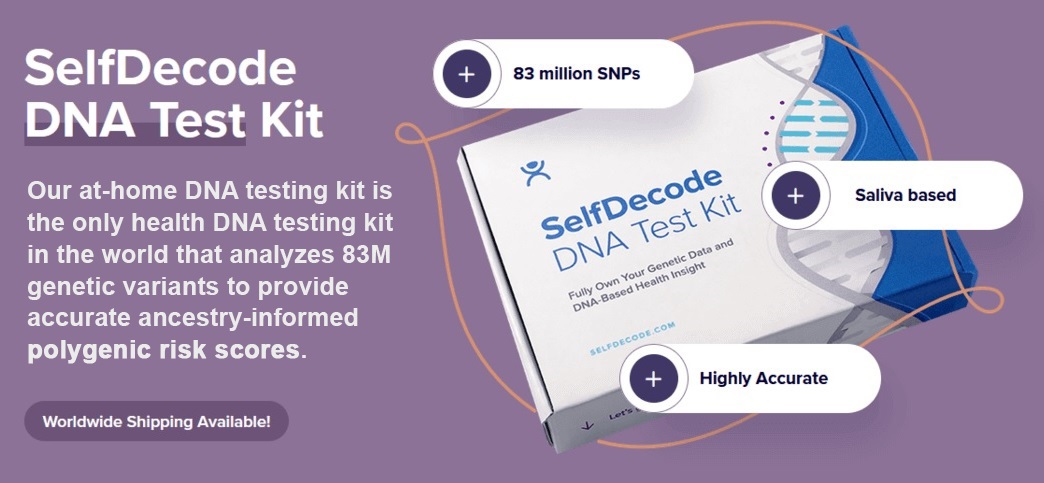
SelfDecode, a genetics and health analysis platform, is built entirely around health genetics rather than splitting its focus between ancestry and health. Its at-home DNA test kit generates a library of over a thousand individual reports, covering areas like inflammation and autoimmunity tendencies, weight and metabolic pathways, and serotonin and melatonin-related patterns connected to mood and sleep. SelfDecode does not offer ethnicity estimates or relative matching, since ancestry isn’t part of its core focus.
Comparing the Two Side by Side
| Category | 23andMe | SelfDecode |
|---|---|---|
| Primary focus | Ancestry, with a limited set of health reports | Health and genetics exclusively |
| Ancestry features | Ethnicity estimate, relative matching | None |
| Health report depth | A defined, regulatory-vetted list of conditions and traits | 1,000+ reports across broad wellness and health pathways |
| Accepts uploaded raw DNA files | No upload feature for outside data | Yes, for a preliminary health preview |
| Best for | A combined but limited look at ancestry and select health conditions | In-depth, ongoing health and wellness genetics |
Using Your 23andMe Raw Data With SelfDecode
Anyone who already has a 23andMe raw DNA file can download it directly from their account and upload it to SelfDecode for a first look at the broader set of health-related genetic pathways SelfDecode covers, well beyond 23andMe’s own built-in health reports. This gives access to a much wider range of topics than 23andMe’s regulatory-limited report list includes.
It’s worth being clear that an uploaded 23andMe file only provides a limited preview through SelfDecode. Because the file was generated using 23andMe’s own lab and chip technology rather than SelfDecode’s, it may not include every marker SelfDecode’s system is built to analyze, and the resulting reports are narrower than what a sample processed directly through SelfDecode’s own lab would produce.
For a more complete health analysis, the SelfDecode At-Home DNA Test Kit, priced at approximately $99, processes a new sample from scratch through SelfDecode’s own lab, offering a fuller version of the reports that an uploaded 23andMe file can only partially provide.
23andMe’s combined ancestry-and-health approach covers meaningful ground, but its health reports were always designed to stay within a specific, regulatory-defined scope. For anyone wanting to go deeper into the health side of their genetics, that same raw data file has more to offer than 23andMe’s own reports reveal on their own.
Frequently Asked Questions
Does 23andMe already provide health reports?
Yes, 23andMe offers a defined set of health reports, including carrier status and select FDA-authorized genetic health risk reports, but this is narrower in scope than a dedicated health genetics platform’s full library of reports.
What’s different about SelfDecode compared to 23andMe’s health reports?
SelfDecode offers over a thousand health-related genetic reports covering a much broader range of wellness pathways, including inflammation, metabolism, and mood, compared to 23andMe’s more limited, regulatory-vetted report list.
Is 23andMe still operating as the same company it used to be?
23andMe went through bankruptcy in 2025 and was acquired by TTAM Research Institute, a nonprofit founded by former CEO Anne Wojcicki. The consumer genetics service has continued operating under this new ownership.
Can I upload my 23andMe data to SelfDecode?
Yes. SelfDecode allows users to upload an existing raw DNA file from 23andMe to get a limited preview of its broader health-related genetic reports.
Should I use 23andMe’s own health reports or upload to SelfDecode?
They aren’t mutually exclusive. 23andMe’s health reports cover a specific, vetted set of conditions, while uploading the same raw data to SelfDecode opens up a much wider range of wellness-focused genetic reports.