
Some people can drink a cup of coffee after dinner and fall asleep without any trouble. Others feel wired for hours after a single afternoon espresso. This isn’t just a matter of habit or willpower. It traces back to specific genetic variants that control how quickly the body breaks down caffeine, variants that appear at different frequencies across different ancestral populations around the world.
Caffeine metabolism is one of the more approachable examples of population genetics, since nearly everyone has some personal experience with it. This article explains the genetics behind caffeine sensitivity, how it varies across ancestral backgrounds, and how you can find out where your own genetics fall on the spectrum from fast to slow metabolizer, using data you may have already collected years ago through a genealogy DNA test.
The Gene That Controls How Fast You Process Caffeine
Caffeine metabolism is largely controlled by a gene called CYP1A2, which produces an enzyme responsible for breaking down roughly ninety percent of the caffeine that enters the body. Depending on which version of this gene a person inherits, that enzyme can work quickly or slowly, which directly affects how long caffeine’s effects last and how strongly a person feels them.
Fast Metabolizers Versus Slow Metabolizers
People with the “fast” version of the CYP1A2 gene clear caffeine from their system relatively quickly, which often means they can drink coffee later in the day without disrupting sleep, and they may need more caffeine to feel a noticeable effect. People with the “slow” version process caffeine much more gradually, meaning its effects linger longer, and smaller amounts can produce a stronger, longer-lasting reaction. Neither version is better or worse, they simply represent different ways the body handles the same substance.
How Caffeine Metabolism Genetics Vary Across Populations
Research into CYP1A2 variants has found that the frequency of fast versus slow metabolizer versions differs across ancestral populations. Certain variants associated with faster caffeine metabolism appear more frequently in some populations than others, a pattern that researchers attribute to the same kind of gradual genetic drift and regional variation seen in many other traits tied to ancestry. This means two people with very different ancestral backgrounds can have meaningfully different baseline relationships with caffeine, independent of how much coffee culture is part of their upbringing.
It’s a good example of how population genetics doesn’t always announce itself in obvious ways. Nobody assumes their coffee habits have anything to do with ancestry, yet the biological mechanism behind those habits often does. It sits quietly alongside more commonly discussed ancestry-linked traits, easy to overlook simply because coffee feels like such an everyday, unremarkable part of life.
Why This Explains More Than Just Coffee Preferences
Caffeine sensitivity affects more than which drinks feel comfortable to enjoy. It can influence sleep quality, anxiety levels after caffeine consumption, and how a person’s body responds to caffeine found in less obvious sources like tea, chocolate, and some medications. Understanding whether you’re a genetically fast or slow metabolizer can explain patterns you may have noticed for years without ever connecting them to genetics, like why an afternoon coffee never bothers one family member while it keeps another wide awake at midnight. Even small amounts of hidden caffeine, the kind found in certain over-the-counter pain relievers or dark chocolate, can produce a noticeable effect in someone whose genetics lean toward slower processing.
This is also a trait that tends to show up consistently within families, since it follows standard genetic inheritance patterns. If caffeine sensitivity seems to run in a noticeable way through one branch of your family tree, there’s a reasonable chance a shared genetic variant is behind it.
Finding Out Your Own Caffeine Metabolism Genetics
If you’ve already taken a DNA test for genealogy purposes, you don’t need a new test to explore this trait. Your downloadable raw DNA file contains the genetic markers connected to caffeine metabolism, entirely separate from anything used for your ancestry results. Uploading that file to a health-focused platform like SelfDecode allows you to see where your CYP1A2 variants fall, offering insight into whether you lean toward fast or slow caffeine processing.
It’s worth knowing that an uploaded file provides a more limited preview than SelfDecode’s own dedicated DNA kit. Third-party files cover a smaller portion of the genome and haven’t gone through SelfDecode’s in-house lab processing and validation, so the results are less complete and less precise than what their own kit provides.
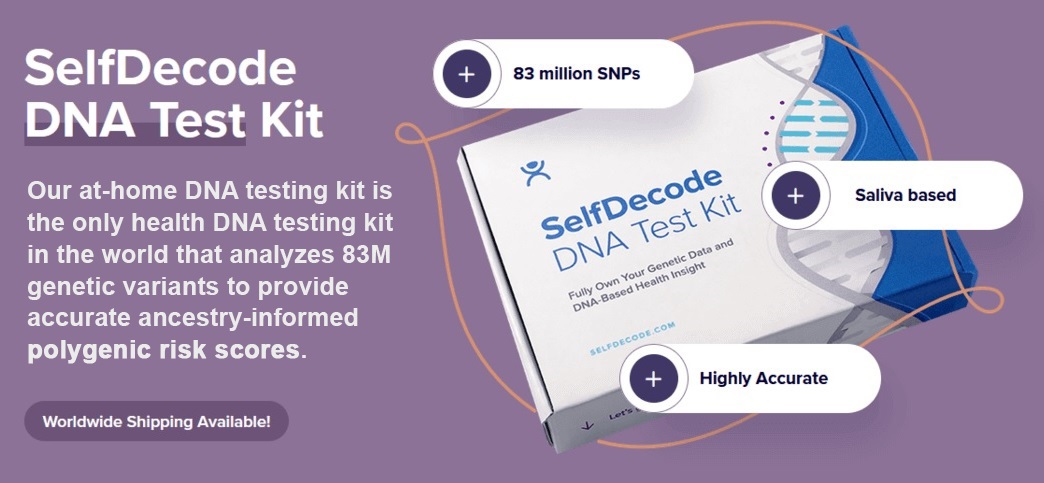
For a more thorough picture of how your genetics relate to caffeine metabolism and other lifestyle-related traits, the SelfDecode At-Home DNA Test Kit reads a much larger share of your genome and unlocks detailed reports across a wide range of health categories. It’s a genuinely practical way to turn a lifelong personal pattern into something backed by real genetic data.
The next time your family debates who can and can’t handle an evening cup of coffee, there’s a good chance the real answer isn’t about willpower at all. It’s written into a gene that’s been quietly shaping caffeine habits across generations, long before anyone in the family thought to question why some relatives sleep just fine after a late espresso and others don’t.
Frequently Asked Questions
What gene controls how the body processes caffeine?
The CYP1A2 gene produces the enzyme responsible for breaking down most of the caffeine that enters the body, and different versions of this gene affect how quickly that process happens.
What’s the difference between a fast and slow caffeine metabolizer?
Fast metabolizers clear caffeine from their system relatively quickly, while slow metabolizers process it more gradually, meaning its effects last longer and can feel stronger.
Does caffeine sensitivity vary by ancestry?
Yes. Research has found that CYP1A2 variants associated with faster or slower caffeine metabolism appear at different frequencies across different ancestral populations.
Can I check my own caffeine metabolism genetics using an existing DNA test?
Yes. Raw DNA files from services like AncestryDNA or 23andMe can be uploaded to a health-focused platform such as SelfDecode to check for genetic markers related to caffeine metabolism.
Is an uploaded file as thorough as a dedicated health DNA kit?
Not quite. Uploaded files provide a more limited preview, since they cover less of the genome and haven’t gone through SelfDecode’s in-house lab processing and validation, unlike their dedicated kit.