If you’ve ever noticed that a single glass of wine turns your face bright red while a friend can finish a whole bottle without any visible reaction, you’ve witnessed a genetic difference in action. This isn’t about tolerance built up over time or simply being a “lightweight.” For a significant portion of the world’s population, alcohol sensitivity is written directly into their DNA, and it shows up far more often in some ancestral backgrounds than others.
This is one of the clearest examples of how ancestry and genetics intersect in a way that affects daily life. It’s not just a curiosity for a genealogy website to mention in passing, it’s a well-documented genetic pattern with a specific biological explanation. This article covers what’s actually happening in the body, why it’s tied so closely to certain ancestral populations, and how you can find out where your own genetics fall, using data you may have already collected years ago.
The Genetic Variant Behind Alcohol Flush Reactions
When your body processes alcohol, it breaks it down in two main steps. First, an enzyme converts alcohol into a compound called acetaldehyde. Second, a different enzyme called ALDH2 breaks that acetaldehyde down further into something the body can safely eliminate. The trouble starts when that second step doesn’t work efficiently, which allows acetaldehyde to build up in the body.
What Acetaldehyde Buildup Actually Feels Like
Acetaldehyde buildup is what causes the flushed face, rapid heartbeat, and general discomfort that some people experience after drinking even small amounts of alcohol. This reaction, often called alcohol flush reaction, happens because a specific genetic variant reduces the effectiveness of the ALDH2 enzyme, slowing down the body’s ability to clear acetaldehyde efficiently.
Why This Genetic Pattern Is Tied to Specific Ancestral Populations
The ALDH2 variant responsible for this reaction is notably common in people of East Asian ancestry, including Chinese, Japanese, and Korean populations, where research estimates it affects a substantial percentage of individuals. It’s far less common in populations with European, African, or South Asian ancestry. This isn’t random. Genetic variants like this one tend to become more or less common in specific populations over many generations, shaped by the particular ancestral groups a person’s family descends from.
This is exactly the kind of pattern that connects ancestry research to genetics in a very concrete way. Two people with identical drinking habits can have completely different physical reactions, and the explanation often traces directly back to which ancestral population contributed that particular genetic variant to their DNA. It’s a reminder that ethnicity percentages aren’t just abstract numbers on a report, they correspond to real biological patterns that show up in everyday life.
Why This Matters Beyond a Red Face
Alcohol flush reaction isn’t just an uncomfortable inconvenience. Research has associated the reduced ALDH2 function behind this reaction with other health considerations related to alcohol consumption, since the acetaldehyde buildup itself is a factor researchers have studied in connection with long-term health effects of drinking. Understanding whether you carry this variant isn’t just genealogical trivia, it’s genuinely useful health information.
It also explains a pattern many families already notice without understanding the mechanism. If reactions to alcohol seem to run more strongly on one side of the family, or if they showed up more prominently after tracing ancestry back to a specific region, this genetic variant is often the reason. Genealogists who’ve mapped out exactly which branch of the family traces to East Asia sometimes find, almost by coincidence, that the same branch is the one known for turning red at family gatherings.
Finding Out Where Your Own Genetics Stand
If you’ve already taken a DNA test for genealogy purposes through AncestryDNA, 23andMe, or a similar service, you have a resource that can help answer this question without any new testing. Your downloadable raw DNA file contains the genetic markers connected to alcohol metabolism, separate from anything used to calculate your ethnicity percentages. Uploading that file to a health-focused platform like SelfDecode allows you to see whether you carry genetic variants associated with reduced alcohol tolerance.
It’s worth knowing that an uploaded file provides a more limited preview than SelfDecode’s own dedicated DNA kit. Third-party files cover a smaller portion of the genome and haven’t gone through SelfDecode’s in-house lab processing and validation, so the results are less complete and less precise than what their own kit offers.
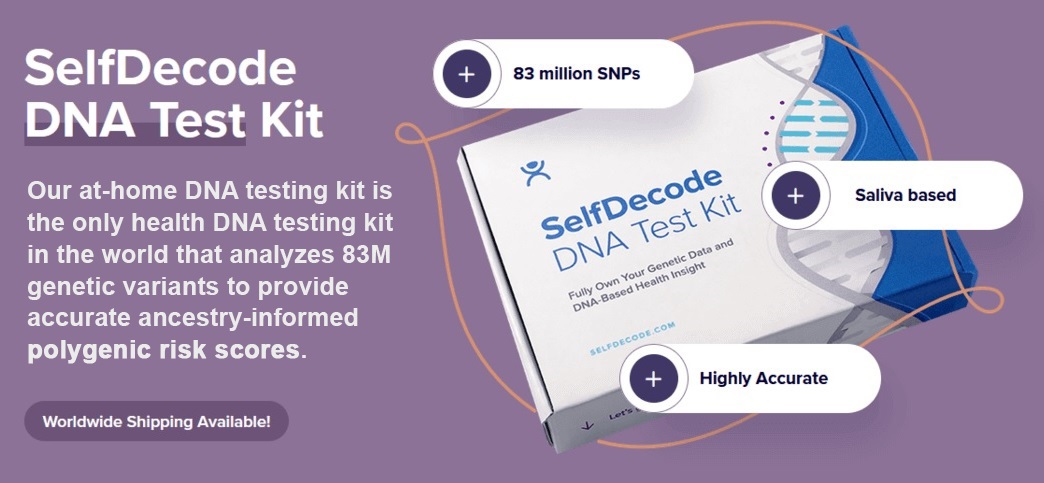
For a more thorough look at how your genetics relate to alcohol metabolism and other health-related traits, the SelfDecode At-Home DNA Test Kit reads a much larger portion of your genome and unlocks detailed reports across a wide range of health categories. It turns a pattern you’ve maybe noticed anecdotally into something grounded in actual genetic data.
The next time someone in your family jokes about turning red after half a glass of wine, there’s a good chance real genetics, tied directly to specific ancestral roots, are behind it. It’s a small, everyday example of how the same DNA that shapes your ethnicity report also shapes the way your body responds to the world around it.
Frequently Asked Questions
What causes alcohol flush reaction?
Alcohol flush reaction is caused by a genetic variant that reduces the effectiveness of the ALDH2 enzyme, leading to a buildup of acetaldehyde when the body processes alcohol.
Which ancestral populations are most affected by this genetic variant?
The variant is notably common in people of East Asian ancestry, including Chinese, Japanese, and Korean populations, and considerably less common in populations with European, African, or South Asian ancestry.
Is alcohol flush reaction the same as simply having a low tolerance?
No. It’s a specific genetic response tied to how efficiently the body breaks down acetaldehyde, rather than a general tolerance built up through drinking experience.
Can I find out if I carry this genetic variant using a DNA test I’ve already taken?
Yes. Your raw DNA file from services like AncestryDNA or 23andMe can be uploaded to a health-focused platform such as SelfDecode to check for genetic markers related to alcohol metabolism.
Is an uploaded file as thorough as a dedicated health DNA kit?
Not quite. Uploaded files provide a more limited preview, since they cover less of the genome and haven’t gone through SelfDecode’s in-house lab processing and validation, unlike their dedicated kit.