
You spit in a tube, mailed it off, and waited weeks for your results. When they finally arrived, you probably went straight for the fun parts: your ethnicity breakdown, a list of DNA matches, maybe a few surprising cousins you never knew existed. That’s the experience most people have with AncestryDNA, and it’s a good one. But the raw data file behind those results contains a lot more than what shows up on your dashboard.
Your DNA file is essentially a massive spreadsheet of genetic markers, and AncestryDNA only uses a small slice of it to build your ethnicity estimate and match you with relatives. The rest sits there, mostly unused, even though it holds real information about things like how your body processes caffeine, your risk for certain health conditions, and traits that run in your family for reasons beyond nostalgia. This article walks through what’s actually in that file and what you can do with the part AncestryDNA never shows you.
What Your Raw DNA File Actually Contains
When AncestryDNA processes your saliva sample, a lab reads hundreds of thousands of specific points along your DNA called SNPs, short for single nucleotide polymorphisms. Each SNP is a tiny variation in your genetic code, and collectively they’re what make you genetically distinct from your neighbor. AncestryDNA uses these SNPs to compare your genetic pattern to reference populations around the world, which is how it estimates that you’re, say, part Scandinavian and part Irish.
The Data Behind the Dashboard
What most people don’t realize is that this same set of SNPs is used by scientists worldwide to study everything from sleep patterns to metabolism to mood. AncestryDNA simply chose to focus its product on ancestry and family connections. The raw file, which you can download directly from your account, contains the full list of your SNP readings, not just the ones used for your ethnicity report. It’s your data. You paid for it, and you’re entitled to see all of it, not just the curated version.
Why Ancestry Companies Only Show You Part of the Picture
It’s not that AncestryDNA is hiding anything from you. The company built its product around genealogy, so its reporting tools are designed for that purpose. Health-related genetic analysis is a completely different specialty, involving different scientific literature, different statistical models, and often a different regulatory framework. Building both into a single platform would be a massive undertaking, so most ancestry companies stick to what they do best.
That division makes sense from a business standpoint, but it leaves a gap for anyone curious about what else their DNA might reveal. Fortunately, that gap has an easy fix. Since AncestryDNA lets you download your raw data file, you can take that same file to a platform built specifically for health-focused genetic analysis.
The Health Information Hiding in Your Genetic Code
Genetic research has expanded rapidly over the past two decades, and scientists have identified associations between specific SNPs and a wide range of traits and health factors. Some examples include how efficiently your body metabolizes caffeine, your genetic tendency toward certain sleep patterns, how your body responds to particular nutrients, and inherited factors linked to conditions like inflammation or mood regulation.
None of this shows up in a standard ancestry report because it was never designed to. Your ethnicity percentages and DNA matches come from comparing specific ancestry-informative markers, while health-related genetics rely on an entirely different set of SNPs studied for entirely different reasons. Both types of information live in the same raw file. Only one of them gets analyzed by AncestryDNA.
Uploading Your File to a Health-Focused DNA Platform
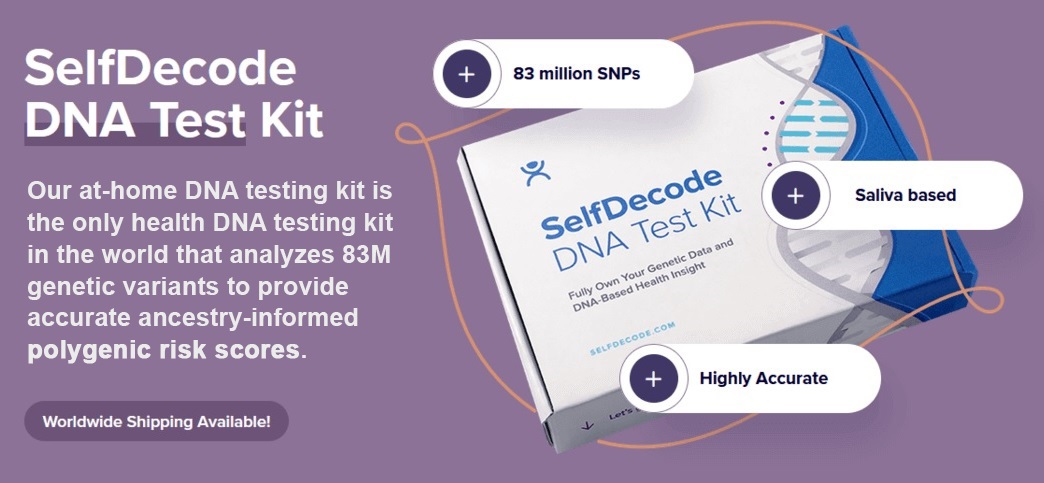
This is where a service like SelfDecode comes in. SelfDecode is built specifically for interpreting the health-related side of genetic data, and it accepts raw DNA files from AncestryDNA, 23andMe, MyHeritage, FamilyTreeDNA, and several other providers. Instead of taking a brand new test, you simply download the raw file you already have and upload it to your SelfDecode account, where it’s analyzed for genetic patterns tied to health and lifestyle traits.
It’s worth being upfront about one limitation. Uploaded third-party files like the one from AncestryDNA give you a preview of your health genetics, but that preview is more limited than what SelfDecode can produce from its own in-house DNA kit. Third-party files typically cover a smaller portion of your genome, and they haven’t gone through SelfDecode’s own lab processing and validation methods, so the results from an upload are less complete and less precise than results from their dedicated kit.
If your uploaded results spark your curiosity, ordering the SelfDecode At-Home DNA Test Kit is the natural next step. The kit analyzes far more of your genome and unlocks SelfDecode’s full library of detailed health reports, giving you a much more thorough and validated picture than an uploaded ancestry file alone can provide.
Either way, the file sitting in your AncestryDNA account is worth a second look. You already paid for the data. Whether you explore it through an upload or a dedicated kit, there’s more in there than a pie chart of your ethnic background.
Frequently Asked Questions
Can I really use my AncestryDNA file on another platform?
Yes. AncestryDNA allows you to download your raw DNA data file from your account settings, and several third-party platforms, including SelfDecode, accept that file for their own analysis.
Is my raw DNA file the same as my ancestry results?
No. Your ancestry results are a processed summary built from a portion of your raw data. The raw file itself contains a much larger set of genetic markers that were never analyzed for your ethnicity report.
Does uploading my file give me the same detail as SelfDecode’s own DNA kit?
Not quite. Uploaded third-party files provide a limited preview, since they cover less of the genome and haven’t gone through SelfDecode’s in-house lab processing and validation. Their own kit provides more complete and more precise results.
Is it safe to download and upload my raw DNA file?
Downloading your raw file is a standard feature offered by AncestryDNA and other testing services. As with any personal data, it’s worth reviewing the privacy policy of any platform before uploading your file.
Do I need to take a new DNA test to explore my health genetics?
Not necessarily. You can start by uploading the raw file you already have. If you want a more complete and validated analysis, ordering a dedicated health-focused DNA kit is the more thorough option.