

Anyone who’s spent time building a family tree knows the satisfaction of watching a surname travel backward through generations, popping up in census records, ship manifests, and old church registries. That same research instinct, the patience to follow a thread across decades and documents, works just as well for tracing something else that runs in families: illness. Health conditions move through generations in patterns, much like names and occupations do, and genealogists are often better equipped to spot those patterns than they realize.
Most family historians focus their research on names, dates, and locations. Fewer think to apply the same methodical approach to health conditions that seem to appear again and again on one branch of the tree. This article looks at how inherited illness can be researched with the same techniques used for any other genealogical pattern, and how modern DNA analysis can add a layer of confirmation that historical records alone can’t provide.
Family Trees Already Contain Health Patterns
Look closely at most family trees built from historical records, and health patterns are often hiding in plain sight. Death certificates list causes of death. Obituaries sometimes mention “a long illness” or specific conditions. Census records occasionally note disabilities. Pension files, especially military ones, frequently include detailed health histories. None of these sources were created to track inherited conditions specifically, but collectively they leave a trail that’s every bit as researchable as a surname.
Reading Between the Lines of Historical Documents
The challenge with these sources is that they describe illness in the language of their time, which doesn’t always match how conditions are labeled today. A 19th century death certificate might list “dropsy,” an old term often associated with heart or kidney failure, or “consumption,” an older name for tuberculosis. Learning to translate historical medical terminology is its own genealogical skill, much like learning to read old handwriting or interpret outdated place names. Genealogy societies and historical medical dictionaries can help bridge that gap, turning a puzzling old term into a modern diagnosis that suddenly makes an entire branch of the family tree easier to understand.
Beyond terminology, timing matters too. A condition that appears across three generations at similar ages is a very different clue than one that shows up once and never again. Genealogists who already track patterns like migration timing or occupation changes across a family line have the exact skill set needed to notice this kind of recurrence in health records as well.
Why Family Health Stories Aren’t Always Reliable on Their Own
Every family has stories about health passed down through generations. Maybe it’s the aunt who always said heart problems ran on her side, or the grandfather who blamed his poor eyesight on “the family curse.” These stories carry real value as research leads, but they’re also shaped by memory, assumption, and sometimes simple misunderstanding of how conditions actually work. A condition that seems to “run in the family” might have a genetic basis, or it might reflect shared environment, diet, or coincidence.
This is where genealogical research runs into a limit that historical documents alone can’t solve. Records and family stories can suggest a pattern, but they can’t confirm whether that pattern has a genetic root. For that kind of confirmation, you need to look at the DNA itself.
Adding Genetic Evidence to Your Health Research
If you’ve already taken a DNA test for genealogy purposes through AncestryDNA, 23andMe, or a similar service, you have a resource that can help here without any additional testing. Your downloadable raw DNA file contains genetic markers connected to a wide range of health-related traits, separate from anything used for ethnicity estimates or DNA matching. Uploading that file to a health-focused platform like SelfDecode allows you to see whether specific genetic patterns support the health story your family records and oral history have been suggesting all along.
It’s worth noting that an uploaded file gives a more limited preview than SelfDecode’s own dedicated DNA kit. Third-party files cover less of the genome and haven’t gone through SelfDecode’s in-house lab processing and validation, so the resulting analysis is less complete and less precise than what their own kit provides.
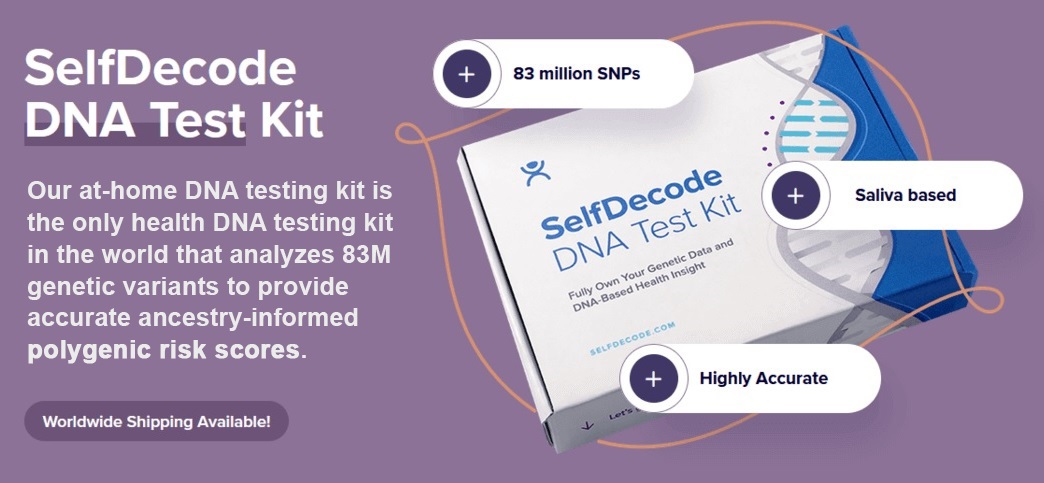
For genealogists who want a more thorough look, particularly when a health pattern keeps showing up across generations in the historical record, the SelfDecode At-Home DNA Test Kit reads far more of the genome and unlocks detailed reports covering specific health categories. It turns a suspected family pattern into something backed by genetic data rather than family memory alone.
Building a Fuller Picture of Family Health History
Combining historical records, family stories, and genetic data gives you a research approach that no single source could provide on its own. Documents tell you what happened. Family stories tell you what was remembered. Genetics can tell you whether a pattern has a biological basis worth taking seriously, whether for your own health awareness or simply to understand your family’s history more completely. It’s the same layered research approach genealogists already use for names and origins, just applied to a different kind of inheritance. The next time a health pattern catches your eye while working through old records, treat it the way you’d treat any other genealogical clue: worth following, worth documenting, and worth confirming with the best evidence available.
Frequently Asked Questions
Can genealogical records really help trace inherited illness?
Yes. Death certificates, obituaries, pension files, and census records often contain health-related information that can reveal patterns across generations, even though they weren’t created for that specific purpose.
Why do old records use unfamiliar terms for illnesses?
Medical terminology has changed significantly over time. Historical documents often use outdated terms, such as “dropsy” or “consumption,” which correspond to conditions known by different names today.
Are family health stories accurate?
Family stories can be a useful starting point, but they’re shaped by memory and assumption. They may point to a real pattern, or they may reflect shared environment or coincidence rather than a genetic cause.
Can I use my existing ancestry DNA file to check for health patterns?
Yes. Raw DNA files from services like AncestryDNA and 23andMe can be uploaded to a health-focused platform such as SelfDecode, which analyzes them for genetic patterns unrelated to ancestry.
Is an uploaded file as thorough as a dedicated health DNA kit?
Not quite. Uploaded files offer a limited preview, since they cover less of the genome and haven’t gone through SelfDecode’s in-house lab processing and validation, unlike their own dedicated kit.