You can collect a lot of family information in a single reunion weekend if you plan ahead. Send charts before the event, set up photo scanning and a recording spot, interview a few relatives in short sessions, and label everything as you go. Spend the final hour organizing and thanking your helpers.
Set Your Goals Before the Weekend
You cannot learn everything in two days, so choose three goals. Maybe you want to identify people in old photos, confirm one ancestor’s birthplace, and record two older relatives. Write the goals on a card.
Goals keep you from drifting, and they make the weekend feel successful. Share them with a helper or two, so each person knows what to watch for. Keep a short list of backup questions in case a goal turns out to be a dead end. A focused plan makes a busy weekend manageable.
Send Charts Before You Arrive
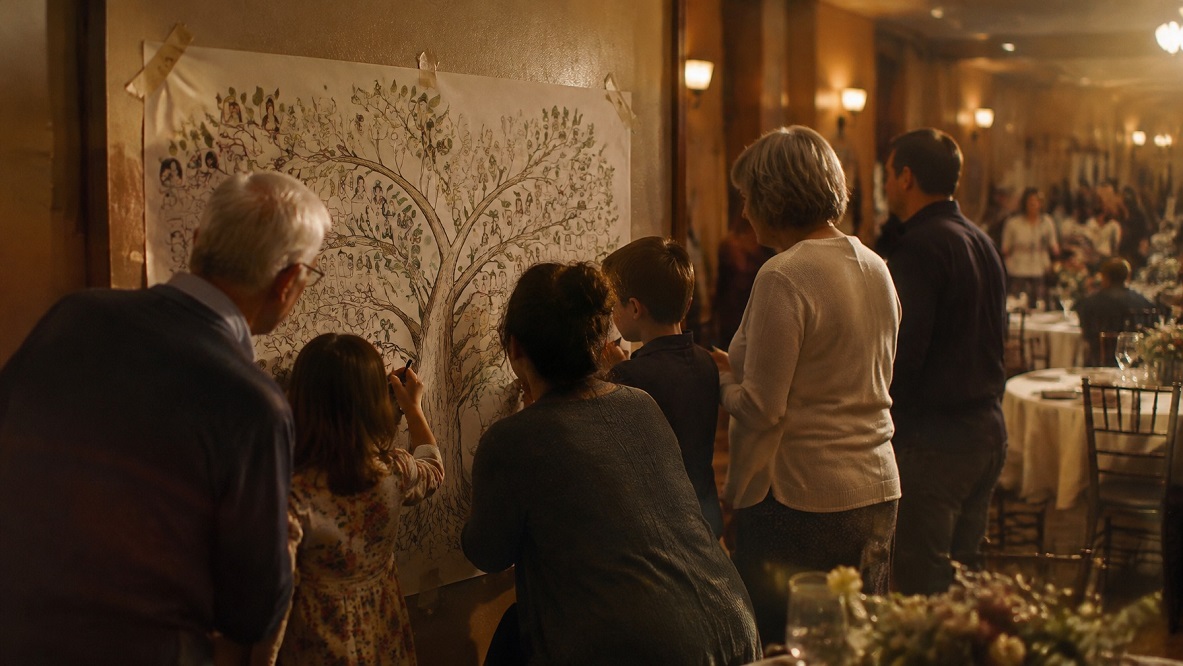
Ancestral Findings suggests mailing a three-to-four-generation chart to each invitee to complete and bring, or return by mail. It also suggests taping a large family tree to a wall with pens nearby, so guests can fill in blanks as they chat.
These two steps do much of your research for you. By the time the weekend begins, you may already know who has dates, who has photos, and where gaps remain. Review the returned charts before you travel, and mark the questions you most want to ask.
Set Up a Photo and Scanning Station
Old photos often hold the best clues. Legacy Tree Genealogists suggests a scanning station using a scanner or a phone app, with scans at 300 dpi or higher, clear file names, and notes naming each person in full. Put the table away from food and drinks.
Ask relatives to bring albums, and note who brought each photo. Write the owner’s name on a sticky note, and scan it with the picture so you never lose track of where it came from. If a relative wants to keep the originals, a quick scan keeps the family’s copy safe.

Interview in Short Sessions
Genealogy.com suggests recording older relatives so their stories are kept in their own words, and taping their reactions to mystery photos, since older members often know the people, places, and occasions. Both ideas fit a busy weekend.
Keep each interview to 20 or 30 minutes, in a quiet corner. Start by stating the date, the place, and the speaker’s name. Ask open questions, and let a photo prompt the memories. Schedule your interviews at the start of the weekend, when people are rested, and leave room for spontaneous stories at dinner.
Label and Organize as You Go
A quick routine saves hours later. At the end of each day, spend 20 minutes doing the following:
- Rename recordings with the speaker’s name and the date.
- Add names to scanned photos.
- Photograph the tree wall and any handwritten charts.
- Write down new questions for follow-up.
- Back up everything to a second place.
Nights at a reunion are busy, so keep the routine short. Even a rough record is better than a pile of unmarked files.
Keep Your Questions Focused
When time is short, ask questions that only a living relative can answer. Names of grandparents, nicknames, hometowns, jobs, and the years of moves are all worth capturing. Records can often supply dates later, but they rarely explain why a family moved or what a house looked like.
Carry your list of goals in your pocket, and tick each one as you go. If a relative offers a surprise story, follow it, then return to your list. Flexibility and focus work well together at a lively weekend gathering.
Wrap Up With Thanks and a Plan
On the final day, take a labeled group photo, and thank everyone who helped. Collect any papers relatives promised to send, and write down who will send what. Share a date when you will send an update.
When you get home, add the new information to your tree within a week, noting the source of each fact. Send the group photo and a short summary to your relatives. A friendly follow-up shows them that their stories matter, and it makes the next gathering easier to plan.
Frequently Asked Questions
What Equipment Do I Need for Reunion Research?
A phone, a notebook, pens, and a printed chart cover most needs. A portable scanner or scanning app helps with photos. Bring a charger and a backup option.
How Do I Research Without Taking Over the Reunion?
Keep activities optional and short. Use stations, and invite people to join when they like. Spend most of the weekend simply enjoying your relatives.
What Should I Do With Information I Cannot Confirm?
Write it down as a family memory, with the speaker’s name. Later, look for records that support it. Do not add it to your tree as fact until you check.
Start with photos and easy questions, and respect a no. Offer to talk by phone later. Share something of your own first.