Somewhere in your ancestry account is a data file built from the exact same sample you submitted when you first ordered a DNA test. That file has already done the hard part, the actual lab work of reading your genetic code, yet most people only ever see a small fraction of what it contains. Getting a fuller picture from that same sample isn’t complicated, but it does require a few specific steps most people never think to take.
This article walks through exactly how to move from a single ancestry report to a much fuller understanding of what your DNA sample actually contains, without submitting a new sample or paying for a second test. It’s a process that takes far less effort than most people assume, mostly because the hardest part, the actual DNA sequencing, has already been done.
Why One Sample Can Support More Than One Kind of Analysis
A DNA testing lab reads hundreds of thousands of genetic markers from your original sample, far more than any single ancestry report actually uses. Ethnicity estimates and DNA matching draw on one specific subset of that data. An entirely separate subset, often the majority of what was collected, relates to health and lifestyle traits and goes completely unused by standard ancestry platforms. Both subsets exist in the same downloadable raw file, which is exactly why one sample can support more than one kind of analysis without any additional lab work. The sample only had to be collected once. Everything after that is simply a matter of which lens you choose to look through.
Step-by-Step: Getting a Fuller Picture From Your Existing Data
Getting from your original ancestry report to a fuller picture of your DNA sample generally follows the same straightforward process:
- Log into the account for the testing company you originally used, such as AncestryDNA or 23andMe, and locate the raw data download option, typically found in your account or DNA settings
- Download your raw DNA file, usually delivered as a plain text or compressed file, and save it somewhere you can easily find it again
- Choose a health-focused platform that accepts uploads from your specific testing company, confirming compatibility before proceeding
- Upload your raw DNA file to that platform, a process that typically takes only a few minutes
- Review the resulting health and lifestyle-focused analysis, keeping in mind that an uploaded file offers a preview rather than the most complete possible results
- Decide whether the preview is compelling enough to justify a more thorough, dedicated DNA kit for a fuller and more validated analysis
None of these steps require submitting a new saliva sample. The entire process works from data collected during your original test, which is part of what makes it such an efficient way to expand your understanding of your own genetics. Most people spend more time deciding what to eat for dinner than they’d need to spend completing this entire process from start to finish.
What Changes Once You Have the Fuller Picture
Once you’ve completed this process, you’re no longer working from a single ancestry snapshot. You have a second, entirely separate layer of information covering categories your original report never touched, things like metabolism, sleep tendencies, and inflammation-related genetics. For genealogists building out a family health history alongside a family tree, this fuller picture can turn vague family health patterns into something grounded in actual genetic data rather than speculation. It’s the difference between guessing that “heart problems run in the family” and having a specific genetic marker to point to as part of that pattern.
Going Even Further With a Dedicated Kit
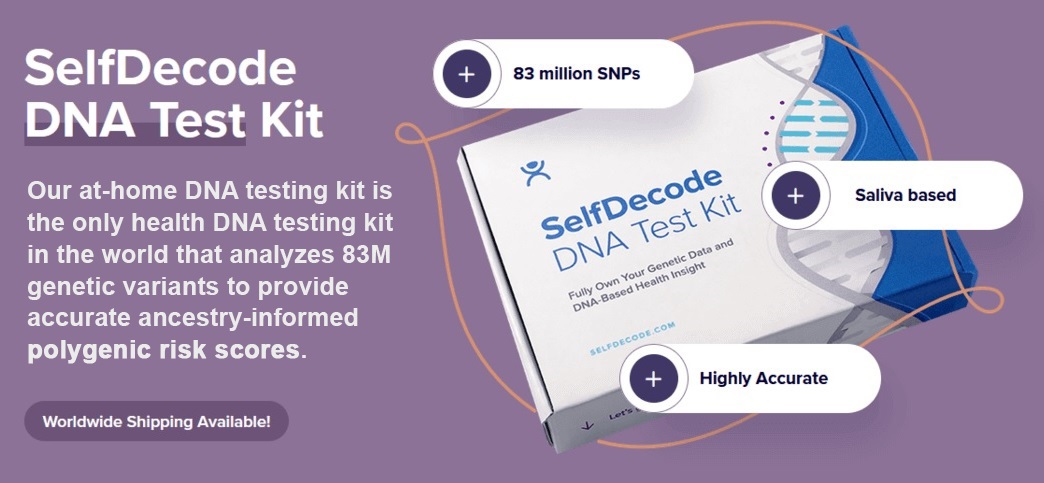
The steps above rely on uploading a third-party file, which is a genuinely useful starting point but comes with a real limitation. Third-party files provide a more limited preview than SelfDecode’s own dedicated DNA kit, since they cover a smaller portion of the genome and haven’t gone through SelfDecode’s in-house lab processing and validation. That’s a reasonable trade-off for a free first look, but it’s worth knowing about before you draw any firm conclusions from the initial results.
For anyone who wants the fullest possible picture, the SelfDecode At-Home DNA Test Kit reads a much larger share of the genome and unlocks detailed reports across a wide range of health categories, offering considerably more depth and precision than an uploaded file alone can provide. It’s the natural next step once the preview from your existing sample has confirmed there’s more worth exploring, and it removes the guesswork that comes with relying on a smaller subset of your genetic data.
Your original sample was always capable of more than a single ethnicity report. Getting the fuller picture just takes a few extra steps, using data you’ve already paid to have collected, sitting in an account most people only ever open once and then forget about entirely.
Frequently Asked Questions
Do I need a new DNA sample to get a fuller picture of my genetics?
No. You can use the raw DNA file already generated from your original test by downloading it and uploading it to a health-focused platform like SelfDecode.
How long does it take to upload and analyze a raw DNA file?
Uploading a raw DNA file typically takes only a few minutes, with the resulting health-focused analysis becoming available shortly afterward.
Is the preview from an uploaded file the most complete analysis available?
No. Uploaded files provide a more limited preview, since they cover less of the genome and haven’t gone through SelfDecode’s in-house lab processing and validation, unlike their dedicated kit.
What kind of information does a fuller picture reveal?
A fuller picture typically includes genetic patterns related to metabolism, sleep, mood, and other lifestyle traits not covered by standard ancestry reports.
Which testing services can I download my raw DNA file from?
Most major testing services, including AncestryDNA and 23andMe, offer a raw data download option within account settings.