
The phrase “DNA test” gets used as if it describes one single thing, but in practice it covers two quite different kinds of analysis, built on different scientific research, designed to answer completely different questions. Understanding the distinction matters, especially for genealogists who may already have the raw material for both types of analysis sitting in a single downloadable file without realizing it.
This article breaks down what ancestry-focused DNA analysis actually does, how it differs from health-focused analysis, and why you don’t necessarily need two separate tests to get both, since the confusion between these two categories often leads people to assume they’ve already gotten the complete picture from a single ancestry report.
What Ancestry-Focused DNA Analysis Actually Does
Ancestry-focused DNA analysis, the kind offered by companies like AncestryDNA and 23andMe as their core product, is built around two main functions: estimating your ethnic background and identifying genetic relatives. To estimate ethnicity, your genetic markers are compared against reference samples collected from populations around the world, producing a statistical best guess about which regions your ancestors likely came from. To identify relatives, your DNA is compared against a database of other test-takers, looking for shared genetic segments that indicate a family connection.
Built for Genealogy, Not Health
This type of analysis draws on a specific category of genetic markers chosen because they vary predictably between populations and can reliably indicate shared ancestry. It says nothing about how your body metabolizes caffeine, processes alcohol, or handles inflammation, because it was never designed to. The scientific research behind ancestry analysis comes from population genetics and anthropology, an entirely different field from the one behind health-related genetic research. Both fields study the same molecule, but they ask it completely different questions.
What Health-Focused DNA Analysis Actually Does
Health-focused DNA analysis, offered by platforms like SelfDecode, looks at a different set of genetic markers entirely, ones studied by researchers for their connection to specific health and lifestyle traits. This includes markers linked to metabolism, sleep patterns, mood regulation, inflammation tendencies, and a wide range of other categories that reflect how an individual’s body tends to function, independent of ancestry or ethnic background.
This type of analysis draws on medical and biological research rather than population genetics, translating specific genetic variants into insights about traits and tendencies relevant to an individual’s own health and daily life. Where ancestry analysis looks outward, comparing your DNA to other people and other populations, health-focused analysis looks inward, focusing entirely on how your own specific genetic makeup functions.
Key Differences Between the Two Approaches
A few core distinctions separate these two types of analysis clearly:
- Purpose: ancestry analysis answers questions about family origin and relatives, while health analysis answers questions about personal traits and wellness factors
- Genetic markers used: each type of analysis draws on a different set of markers within the same raw DNA file, chosen for entirely different reasons
- Scientific foundation: ancestry analysis relies on population genetics and anthropology, while health analysis relies on medical and biological research
- Output: ancestry analysis produces ethnicity percentages and relative matches, while health analysis produces reports on traits like metabolism, sleep, and mood
- Company focus: most testing companies specialize in one type of analysis rather than building deep expertise in both
Despite these differences, both types of analysis can be performed using the exact same raw DNA file, since the underlying data collected from a single sample contains markers relevant to both categories. It’s a distinction worth understanding clearly, since conflating the two leads many people to assume they’ve already explored everything their DNA has to offer after receiving just one type of report.
Why You Don’t Have to Choose Between Them
Because ancestry-focused and health-focused analysis draw on different markers from the same file, choosing one doesn’t require giving up the other. If you’ve already taken an ancestry-focused test through AncestryDNA, 23andMe, or a similar service, your downloadable raw DNA file already contains the markers needed for health-focused analysis as well. Uploading that file to a platform like SelfDecode allows you to add the health-focused half of the picture without repeating any of the original testing process, and without spending anything close to what a brand new test would cost.
It’s worth knowing that an uploaded file provides a more limited preview than SelfDecode’s own dedicated DNA kit, since third-party files cover a smaller portion of the genome and haven’t gone through SelfDecode’s in-house lab processing and validation.
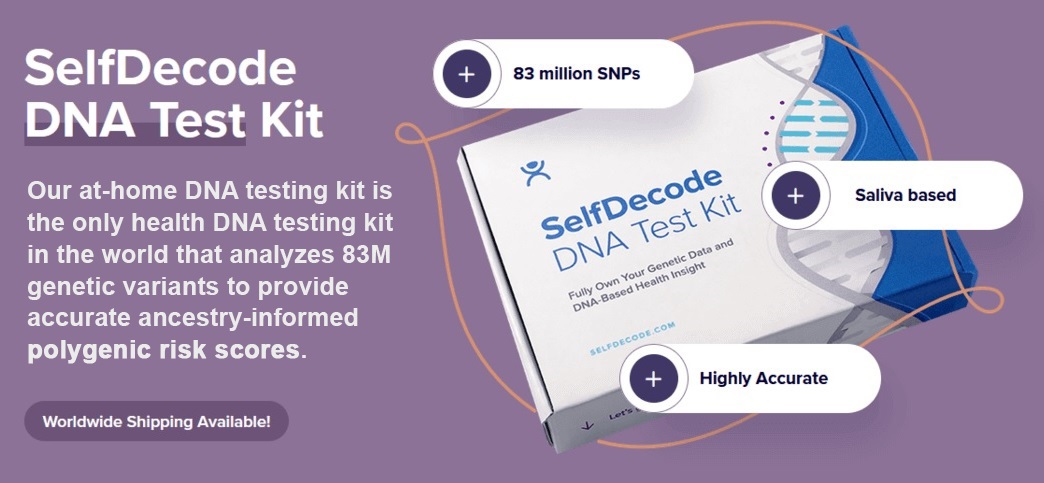
For a more complete and validated version of health-focused analysis, the SelfDecode At-Home DNA Test Kit reads a much larger share of the genome and unlocks detailed reports across a wide range of health categories, giving you the fuller counterpart to the ancestry results you likely already have.
Ancestry and health genetics aren’t competing categories, they’re complementary ones. Understanding the difference between them is really just understanding that a single DNA sample was always capable of answering more than one kind of question, and that receiving one answer was never a reason to assume the other wasn’t available too.
Frequently Asked Questions
What is the main difference between ancestry-focused and health-focused DNA analysis?
Ancestry-focused analysis estimates ethnic background and identifies relatives, while health-focused analysis examines genetic markers connected to traits like metabolism, sleep, and mood.
Do ancestry and health analysis use the same genetic markers?
No. Each type of analysis draws on a different set of markers within the same raw DNA file, chosen for entirely different scientific purposes.
Can I get both types of analysis from a single DNA test?
Yes. Since both use markers from the same raw DNA file, you can upload your existing file to a health-focused platform like SelfDecode without needing a separate test.
Which companies offer health-focused DNA analysis?
SelfDecode is a platform that specializes in health-focused DNA analysis, accepting raw files from AncestryDNA, 23andMe, and other major testing services.
Is an uploaded file as thorough as a dedicated health DNA kit?
Not quite. Uploaded files provide a more limited preview, since they cover less of the genome and haven’t gone through SelfDecode’s in-house lab processing and validation, unlike their dedicated kit.