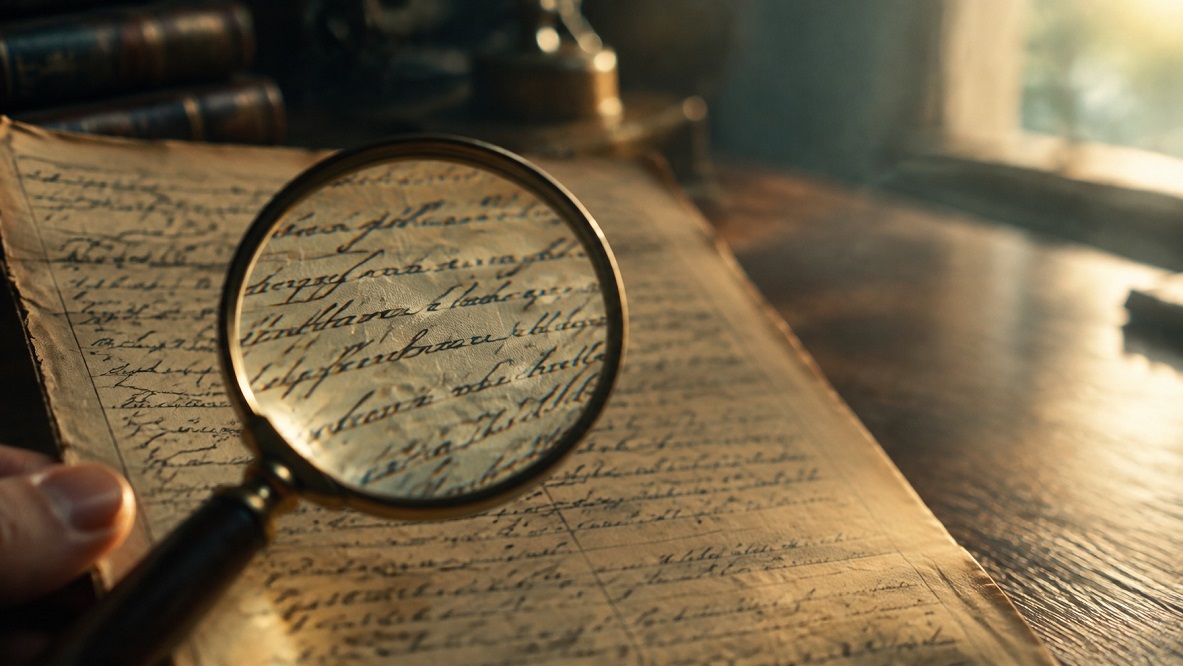
You can get faster at catching details in old documents by reading in layers, comparing records side by side, and practicing on a regular schedule. Start with the whole page, then study specific fields, then check the margins. A few minutes of deliberate practice each week makes small clues stand out, such as an odd date, a repeated neighbor, or a changed spelling.
Read Every Document in Three Passes
Reading a record once from top to bottom invites you to skim. Instead, make three deliberate passes:
- The whole page: Note the type of record, the date, the place, and who created it.
- The fields: Read each name, age, relationship, place, and date one at a time.
- The margins and extras: Look for notes, stamps, signatures, tick marks, crossed-out entries, and changes in handwriting.
Each pass has a single job, which makes it easier to notice what you would otherwise skim past.
Learn the Habits of the Person Who Wrote the Record
Enumerators, clerks, and church officials each had habits: favorite abbreviations, unusual flourishes, and their own way of forming certain letters and numbers. Mistakes crept in as well. The Ancestor Hunt points out that hurried census takers and clerks working from difficult handwriting introduced many of the differences researchers see in names.
To learn a writer’s habits, copy a few of their letters and numerals from a clear section of the page. Make a small alphabet card with their capital S, their 1 and 7, and their double letters. Referring back to it makes tricky entries much easier to read.
Compare Documents Side by Side
Details jump out when two records sit next to each other. Place two documents about the same person on your screen and list every difference in age, place, spelling, or occupation. Each difference is a clue, not an obstacle.
Timelines work the same way. Family Tree Magazine explains that a timeline’s age and source columns help you catch errors, such as a child born before a parent, and show where sources disagree. Putting facts in one view trains your eye to notice what does not fit.
Try the same exercise with census records. Line up one household across two decades and notice who is new, who is gone, and whose age changed by far more than ten years.

Slow Down on Numbers and Dates
Numbers are the easiest details to misread. In old handwriting, a 1 can look like a 7, a 3 like a 5, and a 0 like a 6. Build a quick habit of checking the math:
- Subtract the listed age from the record year to estimate a birth year.
- Check that children appear in a sensible birth order.
- Confirm that marriage dates leave enough time before the first child.
- Look for ages that jump unevenly between censuses.
Practice With Short, Regular Drills
Like any skill, noticing details improves with practice. Choose one document you think you know well and give it ten minutes. Your goal is to list five details you had not noticed before. Alternatively, transcribe a paragraph slowly and then compare your version with the original.
Keep a running list titled “Things I Missed.” When you spot an overlooked detail, write down what it was and where it appeared. After a few weeks, you will see which types of details you tend to skip and can watch for them.
Pick One Old Document and Look Again Today
Choose a record you have not studied in a while and run it through the three passes. Your knowledge of the family has grown since you first read it, so you may be surprised by what is now visible. Small, regular practice builds the kind of attention that makes research faster and more rewarding.
Frequently Asked Questions
How Long Does It Take to Get Better at Reading Old Documents?
Many people notice improvement after a few weeks of regular practice, though the pace varies. Short, frequent sessions tend to work better than occasional long ones. Keep a list of the details you miss so you can track your progress.
Should You Transcribe a Document or Just Read It?
Transcribing forces you to slow down and look at every word and number. It is worth doing for key documents, such as wills, deeds, and marriage records. For routine records, a careful three-pass read is usually enough.
What Details Are Easy to Miss in Census Records?
Columns such as relationship to the head of household, marital status, and year of immigration are often skipped. The order of households and the neighbors on either side can also reveal useful connections. Notes in the margins deserve a look as well.
How Do You Stay Focused While Studying Dense Documents?
Work on one page or one section at a time, and take short breaks when your attention fades. Enlarging the image or adjusting its contrast can make the details easier to see. Writing down your observations as you go keeps your mind engaged.