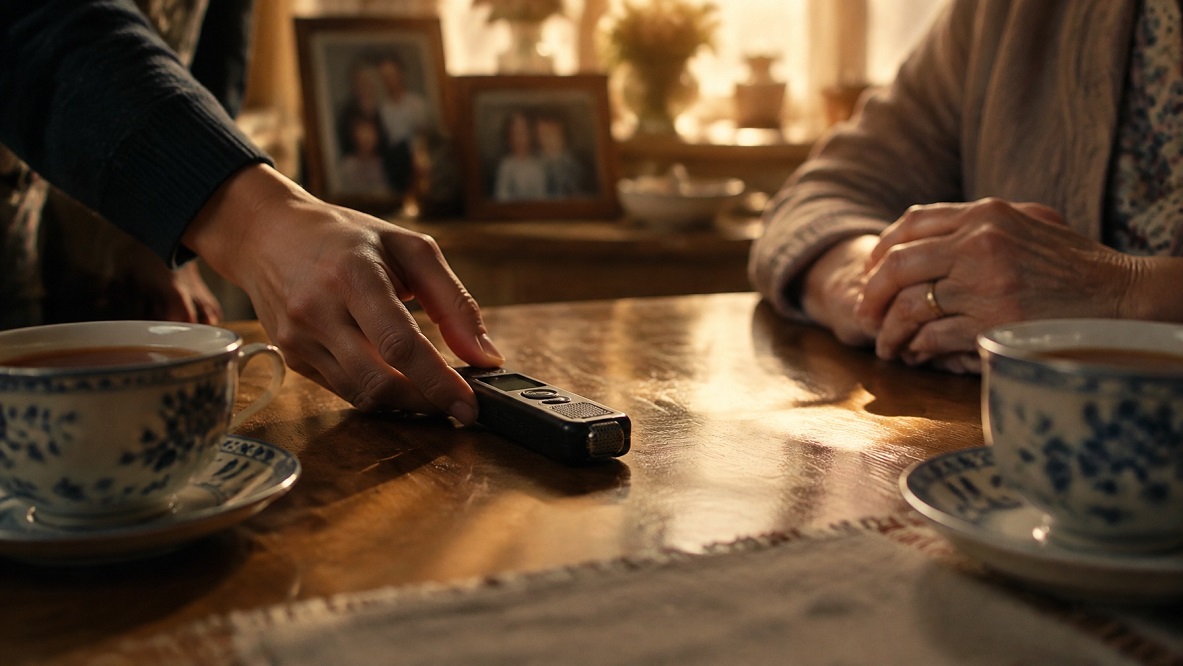
To record your family’s stories this holiday season, choose a quiet spot, use a phone or free app you already know, ask permission, and test your setup before anyone arrives. Keep each recording to an hour or less, and note the names, date, and place right away. A simple plan beats fancy gear.
Choose a Quiet and Comfortable Spot
The Library of Congress Veterans History Project advises picking a comfortable, quiet place, ideally the interviewee’s home, and putting the interviewee’s comfort first. The same idea works for any family recording.
Holiday homes are noisy, so plan ahead. Record before the guests arrive, or on the quiet morning after the big meal. Turn off the television, close the door, and silence the dishwasher. Soft furniture, rugs, and curtains reduce echo, so a living room usually sounds better than a bare kitchen. Offer tea or water, and let your relative pick the chair.
Pick a Tool That Is Simple to Use
StoryCorps offers a free phone and tablet app for conversations in the same room, plus a browser option for relatives far away. You need an interview partner, a quiet space, and a device with a microphone. The app cannot record phone calls, so use the browser option for long-distance chats.
If you would rather keep it simple, the voice recorder app already on your phone works well for a face-to-face conversation. Choose one tool and stick with it. Learning a new gadget in the middle of an interview is a good way to lose a story.
Ask Permission and Set the Tone
Ask first, and explain what you plan to do with the recording: save it for the family, share it with cousins, or add it to your research. PBS History Detectives suggests recording interviews with relatives and writing your questions in advance so you can work through them.
Open the recording by saying the date, the place, and the names of everyone present. Then begin with an easy question, such as a favorite holiday food. A warm start helps people relax, and a recorded yes at the beginning keeps everyone clear about the plan.
Test Your Setup Before Guests Arrive
A five-minute test can save an afternoon of regret. Run through this short list the day before:
- Charge your device fully, and keep a charger within reach.
- Free up storage space so a long recording will not stop early.
- Record 30 seconds, then play it back to check the volume.
- Switch on do not disturb so calls and alerts stay silent.
- Set the phone on a stable surface, close to the speaker.
Tap the screen once in a while to confirm it is still recording. Then set the phone down and give your relative your full attention.

Label and Back Up Every Recording Right Away
A recording you cannot find is a story you cannot share. As soon as you finish, rename the file with the speaker’s name and the date, such as Rose Miller 2026-11-26. Save a copy in a second place, like a cloud folder or an external drive.
Then write a short log of the topics, with approximate times. You do not need a full transcript. A simple list that says 4:10 move to Dayton, 12:30 first job will help you find the best parts later. Add the key names to your research notes so each story connects to your tree.
Keep the Conversation Flowing
Once the recorder is running, forget it. Look at your relative, not the screen. Ask one question at a time, and let silences breathe, because a pause is often the moment a story starts. If the talk drifts to a new topic, follow it. You can steer back later with a gentle question, such as, “Can you tell me more about that house?”
Record One Short Conversation This Week
Pick one relative, one quiet spot, and one tool. Prepare three open questions, run your test, and record for 20 minutes. Thanksgiving is November 26, so this week is a good time to practice. Afterward, label the file, save a copy, and thank your storyteller.
Frequently Asked Questions
What Is the Best Way to Record on a Phone?
Use the voice recorder app, and place the phone close to the speaker on a stable surface. Do a 30-second test first. Keep your hands off the table to avoid bumps.
How Long Should a Recording Be?
Aim for 30 to 60 minutes. Shorter recordings are easier to review and share. Plan a second session if the stories keep flowing.
Should I Ask Permission Before Recording a Relative?
Yes, it is polite and wise to ask, and to say what you plan to do with the recording. Record the yes at the start. If someone prefers not to be recorded, take notes instead.
What Should I Do With a Recording Afterward?
Save a copy in two places, label it with names and the date, and share it with the storyteller. Add a short list of topics to your notes. Ask each person before you share it more widely.